Chief Risk Officer Role in Banking: Evolution in the Age of AI

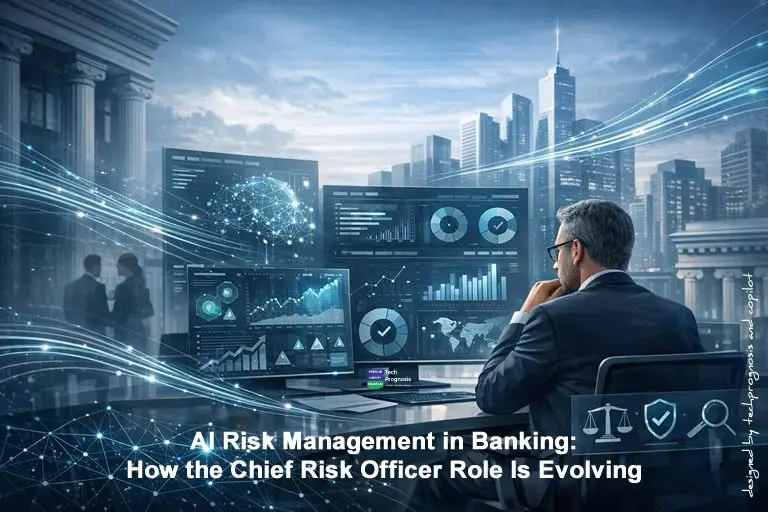
Simulation of how AI risk management is reshaping banking and the Chief Risk Officer role

AI risk management is becoming a defining priority for banks and other financial institutions. As artificial intelligence moves from experimentation to operational use across financial services, the Chief Risk Officer is being asked to do more than monitor exposures and enforce controls. The role now sits at the center of AI governance, model risk management, regulatory discipline, and customer trust.

Over the next several years, AI in banking will reshape how institutions identify emerging threats, assess customer and portfolio risk, detect anomalies, and respond to changing market conditions. For Chief Risk Officers, the shift is not simply technological. It is strategic. The role is evolving from oversight alone to active partnership in enterprise transformation, responsible AI adoption, and predictive risk management.

Read more

Share

ISO 27001 Statement of Applicability (SoA): A Deep Dive Guide

Businessmen working with a laptop, books, a pencil and tablet with text of some of the key elements of the ISO 27001 Statement of Applicability on a tablet computer with check boxes.

Understanding the Statement of Applicability (SoA) for ISO 27001: A Deep Dive

ISO 27001 is the international standard for information security management, offering a robust framework for organizations to manage and protect sensitive data. A key component of this framework is the Statement of Applicability (SoA), a crucial document that outlines the security controls an organization has chosen to implement based on its specific needs, risk assessment, and the scope of its Information Security Management System (ISMS).

In this blog post, we’ll explore the Statement of Applicability in-depth, explaining its purpose, principles, and relevance in the ISO 27001 certification process. We’ll also provide insights into sector-specific examples, implementation challenges, best practices, and recommend some popular tools for managing your ISO 27001 implementation. By the end of this guide, you’ll have a clear understanding of how to approach the SoA and how to effectively integrate it into your organization’s information security strategy.

Read more

Share

Data Pseudonymization in Cybersecurity: A Practical Guide

Image of data pseudonymization, or data protection technique concept with isometric laptop with lock on folder, shield and key, scrambled text, and protected login entry in background.

The Power of Data Pseudonymization in Cybersecurity: Protecting Personal Data with Practical Examples

Data breaches and cyber threats are becoming increasingly common, and as a result, safeguarding personal data has become paramount for individuals and organizations alike. With increasing cyber threats and stringent data protection regulations, innovative solutions like pseudonymization are gaining traction. But what exactly do we mean by replacing sensitive data values with artificial identifiers, and how does it bolster cybersecurity?

This blog post will delve into what pseudonymization is, why it matters, and how it can be applied in various sectors. We’ll also discuss practical use cases to help you understand its significance in real-world scenarios.

Read more

Share

GDPR Accountability Principles: A Practical Guide

Image of the Euopean Union's data protection law concept with text of the GDPR Accountability Principles

Understanding Accountability Principles under the EU GDPR: A Practical Guide with Sector-Specific Insights

It is safe to argue that today, data has become one of the most valuable assets for organizations. With the rise of data collection, processing, and sharing, the European Union’s General Data Protection Regulation (GDPR) has put accountability at the forefront of data protection practices. But what does accountability under the GDPR really mean for your organization, and how can you ensure compliance while fostering a culture of responsibility and ownership over data?

This article breaks down the GDPR’s accountability principles, provides sector-specific examples, and offers practical advice to help you navigate this complex terrain. Whether you work in healthcare, finance, retail, or any other industry, understanding and implementing these principles can help protect your organization and build trust with your customers.

Read more

Share

Information Asset Security and Control: Tailored Strategies for SMBs

Isometric image of information asset security and control simulation showing a laptop with a security shield in front of it, a stack of storage devices with a locked padlock on top, an encryption key and a folder with a password prompt in front.

Information Asset Security and Control: Best Practices for Small and Medium-Sized Businesses

Information is one of the most valuable assets a business can possess in today’s fast-paced digital world. From customer data to financial records, the information that companies handle is crucial to their operations and success. However, with the rise in cyber threats, information asset security and control has become more critical than ever.

This comprehensive guide will delve into the essentials of information asset security and control, offering practical advice tailored for small and medium-sized businesses (SMBs). We’ll cover the importance of securing information assets, explore common threats, and provide best practices to safeguard your business.

Understanding Information Asset Security

What Are Information Assets?

Information assets include any data, digital files, and knowledge that hold value to your business. These can be customer records, financial information, proprietary software, marketing strategies, and even employee details. For SMBs, the security of these assets is paramount to avoid financial loss, reputational damage, and legal repercussions.

Read more

Share

IT Governance: Key Focus Areas and Best Practices for Businesses

Isometric IT Governance concept with magnifier, graphs, clock, coins, tablet computer, laptop, business presentation, negotiations, and conference meeting illustration.

Understanding IT Governance: Key Focus Areas and Best Practices for Businesses

In today’s digital age, information technology (IT) is a critical component of business success. However, managing and aligning IT with business goals can be a complex task. This is where IT governance comes into play. IT governance ensures that IT resources and systems support business objectives, manage risks effectively, and deliver value. In this article, we will explore the key focus areas of IT governance and provide practical examples and best practices for businesses.

What is IT Governance?

IT governance is a framework that ensures IT investments support business goals, manage risks, and deliver value. It involves a set of processes, policies, and structures that help organizations manage and control their IT operations. Effective IT governance aligns IT strategy with business strategy, optimizes resources, and ensures compliance with regulations.

Read more

Share
Share
Share