Cryptocurrency Mining: A Simple Guide for Everyone

Image of cryptocurrency mining isometric concept with people working at laptop or mining farm.


Navigating the World of Cryptocurrency Mining and Why Small Organizations Should Be Worried About Illicit Crypto Mining Activities

In recent years, cryptocurrencies have emerged as a revolutionary force in the financial world. Bitcoin, Ethereum, and other digital currencies are becoming household names. But how exactly do these virtual currencies come into existence? At the heart of this digital revolution lies a process called cryptocurrency mining. For many, cryptocurrency mining remains a mysterious and complex activity, but it doesn’t have to be.

This article will demystify crypto mining, provide practical examples, and explore its various use cases in an easy-to-understand manner. Whether you’re a seasoned professional or someone curious about the digital currency world, this guide is for you.

What is cryptocurrency?

Cryptocurrency is a form of digital currency that can be used in exchange for goods, services, and even real money, similar to other currencies. However, unlike other currencies, cryptocurrency operates independently of a central bank and uses encryption techniques and blockchain technology to secure and verify transactions.

To quote Malwarebytes, “Two words—“cryptography” and “currency”—combine to form “cryptocurrency,” which is electronic money, based on the principles of complex mathematical encryption. All cryptocurrencies exist as encrypted decentralized monetary units, freely transferable between network participants.” Or put more simply, cryptocurrency is electricity converted into lines of code, which have a real monetary value.  (See a detailed article by Malwarebytes on this topic here).

Read more

Share

NBA Fines And Non-Compliance Lessons for SMBs

Image of an arrangement with money, gavel, calculator, and contract illustrating the consequences of non-compliance with laws, rules, and regulations.

NBA Fines And Non-Compliance Lessons for SMBs

Regulations on the local, state, and federal levels are on the rise and this is putting a lot of pressure on compliance efforts of Small and Medium-sized businesses (SMBs) and exposing the fact that these organizations can only avoid costly fines and/or lawsuits for non-compliance by maintaining strict compliance throughout their information management processes.

I found the fines levied by the National Basketball Association (NBA) on players including the likes of the late Los Angeles Lakers Great, Kobe Bryant, and Mark Cuban, the owner of the Dallas Mavericks basketball team, among others, as a good lesson on the cost of non-compliance.

The NBA has consistently fined players who were in non-compliance of its rules and these violations range from the serious to what one could argue is the absurd – like kicking a ball in frustration or throwing a basketball into the stands in celebration of a win.

Read more

Share

Understanding NIST 800-30: A Guide to Effective Risk Management


Image showing the essential steps of the core of NIST 800-30: the Risk Management Framework - prepare, categorize, select, implement, assess, authorize, and monitor.

More than ever, organizations must balance a rapidly evolving cybersecurity and privacy threat landscape against the need to fulfill business requirements on an enterprise level. Organizations, both big and small, face a myriad of threats that can compromise sensitive information and disrupt business operations. To tackle these challenges, the National Institute of Standards and Technology (NIST) has developed a comprehensive framework known as NIST 800-30, which provides a structured approach to risk management.

In this article, we will explore the essential components of NIST 800-30 and shed light on how it can help organizations bolster their cybersecurity efforts.

What is NIST 800-30?

NIST 800-30 is a vital document within NIST’s Special Publication 800 series that focuses on risk management. It provides organizations with a structured approach to identify, assess, and manage cybersecurity risks effectively.

This framework empowers organizations to make informed decisions and allocate resources efficiently to protect their information and systems.

Read more

Share

How Shadow IT Silently Leaks Company Data Online: Examples and Solutions

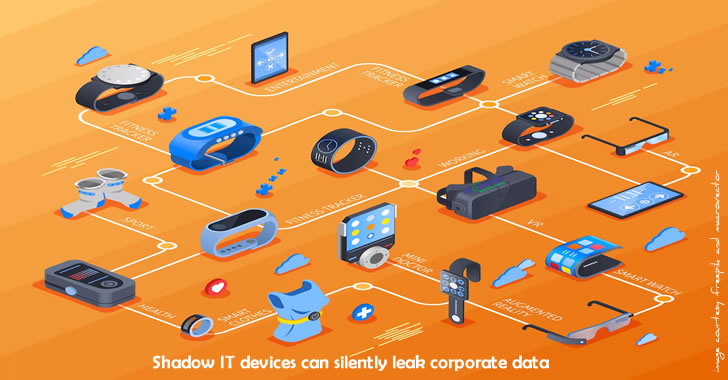
Image showing icons and names of modern mobile and wearable devices, often referred to as "Shadow IT", like fitness trackers, smart watches, health monitors, etc.

Introduction

The fast-paced nature of today’s digital world has made the use of technology in the workplace essential for productivity, and efficiency. However, with the advent of Shadow IT, companies are facing a growing threat – the silent leakage of sensitive company data online.

Shadow IT refers to the use of unauthorized or unapproved software, applications, or devices within an organization. While it may seem harmless at first, this practice can have serious consequences, as it can inadvertently expose confidential information to the world.

In this article, we will explore how Shadow IT can silently leak company data online, and provide real-life examples to illustrate the risks involved.

Read more

Share

Web Browser Security: Evaluating Browser Settings to Stay Safe Online

Image of a man and woman with a shield showing an SSL padlock

Web browser security settings. Many of us virtually live online, but how often do we even take a minute to evaluate web browser security settings before jumping online?

The web browser, whether it is Microsoft Edge, Mozilla Firefox, Google Chrome, Brave, Opera etc. has become a major fixture in our business and personal lives. We interact with the world using one of these tools every day.

Given how important the web browser is in our every day business or personal transactions, it makes sense to ensure that the browser you use is a safe as possible.

We will discuss some of the web browser security settings options available below, depending on your web browser of choice.

Note: We should point out however,  that increasing the security of a particular web browser may affect the functionality of some web sites. For example, disabling JavaScript may prevent some websites from working properly.

Read more

Share

Business Tech Problems: Options for Austin, Texas Area Printers

Image of workers and equipment in a commercial printing house.

With the ever increasingly rapid advance in information technology, many small businesses in the Austin, Texas area, especially commercial printing companies, face overwhelming business tech problems.

Now more than ever, we depend on technology to run our business (and our lives). When the “Internet goes down,” most businesses are at a standstill until they are back online, costing thousands of dollars in lost productivity and sales.

It’s not just the BIG business tech problems, but things like file access, password protection, being able to print and recovering files or versions of files that were accidentally overwritten or deleted. All of these business tech problems are common needs in today’s technology-heavy enterprises.

Read more

Share
Share
Share