
A Comprehensive Guide to Security Testing for Critical Systems: How Businesses in Round Rock Can Protect Sensitive Data
In today’s digital age, cybersecurity is not just a technical concern—it’s a critical aspect of protecting your business’s future. As businesses in Round Rock, Texas, and surrounding cities grow increasingly dependent on technology, securing sensitive data and critical systems has become more important than ever. Whether you’re in healthcare, finance, or retail, data protection should be a top priority.
This comprehensive guide will walk you through the essentials of security testing and security assessments, focusing on how businesses can safeguard their most critical systems, particularly those holding sensitive information.
From understanding the differences between security testing and security assessments, to how you can incorporate best practices into your own operations, this blog is a valuable resource for business owners, managers, and IT leaders looking to ensure that their cybersecurity measures are up to par.
Let’s dive into how effective security testing and risk assessments can make a difference in your organization’s security posture.
What is Security Testing vs. Security Assessments?
When it comes to safeguarding your business, it’s important to understand the difference between security testing and security assessments—two key components in a comprehensive cybersecurity strategy. Both are integral but serve different purposes.
Security Testing is primarily about identifying vulnerabilities in your systems. It’s a hands-on, often technical approach, where various tools and techniques (e.g., vulnerability scanning, penetration testing) are used to find weaknesses in your network, software, or hardware. These tests may include automated scans or manual testing of specific areas such as network security, firewalls, or web applications.
On the other hand, Security Assessments are broader and more strategic. They typically involve a detailed review of your organization’s security policies, processes, and overall security posture. A security assessment might include evaluating your current security framework, assessing compliance with regulations (e.g., HIPAA, PCI-DSS), and identifying business risks related to cybersecurity threats. These assessments provide a holistic view of your organization’s security health and are usually tailored to your specific needs.
In the context of critical systems that house sensitive data, security assessments are often the first step, followed by targeted security testing to identify and address specific vulnerabilities.
Why System Criticality Matters in Security Assessments
When developing a security strategy for your business, understanding the criticality of your systems is essential. Critical systems are the backbone of your operations, and any vulnerabilities within them could have significant consequences. These systems typically handle sensitive data, such as customer information, financial records, or health data.
System criticality refers to the importance of a system in the overall functioning of your business. For example, in healthcare or finance, a breach in critical systems could lead to severe financial loss, regulatory penalties, or reputation damage. Because of this, organizations must adopt a layered security approach and prioritize securing their critical systems.
When conducting a security assessment, your team must consider system criticality in the following ways:
-
Prioritization: Identify which systems are most critical to business continuity and data protection. These should receive the highest priority for testing and remediation.
-
Tailored Security Controls: Not all systems need the same level of protection. For example, a cloud-based CRM system may need different security controls compared to an internal server housing medical records.
-
Business Continuity: The ability to recover quickly from a security incident depends on your system’s criticality. For highly critical systems, ensure there is a clear and tested disaster recovery plan in place.
Incorporating system criticality into the design of your security assessment ensures that your most valuable assets are protected first and foremost.
How Sensitive Data Affects Your Security Assessment
The presence of sensitive data—such as personally identifiable information (PII), financial records, or intellectual property—adds another layer of complexity to your security needs. If your business handles such data, then the risk of data theft or breach is heightened, and you must ensure that sensitive data is properly protected at every stage.
Sensitive data directly influences the design of your security assessment in the following ways:
-
Regulatory Compliance: Depending on the industry, there may be strict regulations (e.g., GDPR, HIPAA, PCI-DSS) governing how sensitive data should be handled. A thorough security assessment will evaluate your compliance with these standards and identify areas of non-compliance that could lead to penalties or legal action.
-
Data Encryption: Ensuring that sensitive data is encrypted at rest and in transit is a key part of any security test. This prevents unauthorized parties from accessing the data, even if they manage to breach the system.
-
Access Control: It’s vital that only authorized personnel can access sensitive data. Role-based access controls (RBAC), multi-factor authentication (MFA), and user activity monitoring are essential aspects of securing sensitive data.
A thorough security assessment will help identify where sensitive data resides, who has access to it, and whether proper encryption and access controls are in place.
The Role of Configuration Management in Security Testing
Configuration management is another cornerstone of effective security. It refers to the practice of maintaining an accurate and consistent configuration for all your hardware and software systems. Without effective configuration management, systems are more likely to be misconfigured, leaving them vulnerable to attacks.
For businesses dealing with critical systems and sensitive data, poor configuration management can lead to a variety of risks, including:
-
Misconfigured Firewalls: A firewall with incorrect rules could leave your network open to attacks.
-
Outdated Software: Failing to regularly patch software can allow zero-day vulnerabilities to be exploited.
-
Unauthorized Changes: Without proper monitoring, unauthorized changes to system configurations can introduce security holes.
When designing your security tests, ensure that configuration baselines are established for each critical component of your system. These baselines define how each system or device should be configured to be secure. Automated configuration compliance checks can help verify whether systems are aligned with these baselines, and flag any discrepancies.
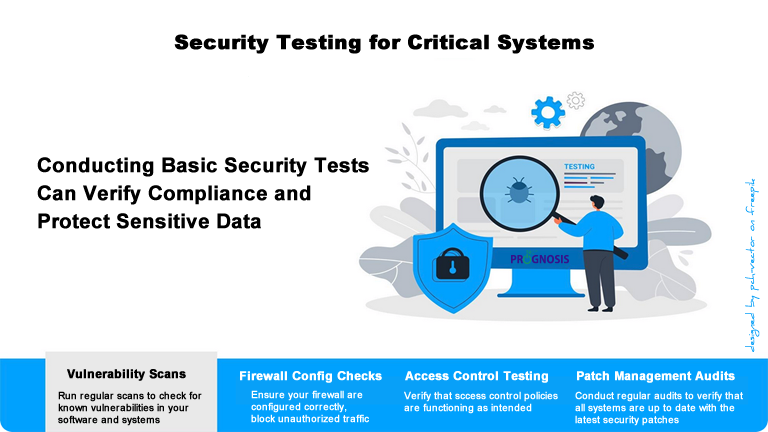
Basic Security Tests for Verifying Compliance
To ensure that your critical systems are properly configured and secure, you can implement basic security tests that automatically verify compliance with your established baselines. Some useful tests include:
-
Vulnerability Scans: Run regular scans to check for known vulnerabilities in your software and systems. Tools like Nessus or Qualys can automate this process.
-
Firewall Configuration Checks: Ensure that your firewalls are configured correctly and are blocking unauthorized traffic. Automated tools can compare your firewall configurations against best practices and highlight potential risks.
-
Access Control Testing: Verify that your access control policies are functioning as intended. This includes checking that user permissions are correctly assigned and that multi-factor authentication is required for sensitive systems.
-
Patch Management Audits: Conduct regular audits to verify that all systems are up-to-date with the latest security patches.
Leveraging NIST Guidelines for Robust Security Assessments
Incorporating NIST guidelines into your security assessment process provides a structured, well-tested approach to securing critical systems. NIST (National Institute of Standards and Technology) offers frameworks like the Cybersecurity Framework (CSF) and the Risk Management Framework (RMF) that can guide your team in assessing and improving your cybersecurity posture.
These frameworks cover everything from risk identification and control implementation to incident response and recovery planning. By aligning your security assessment with NIST standards, you ensure that you are addressing both the technical and procedural aspects of security.
Resource Availability: The Key to Effective Security Testing
Finally, the success of any security testing and assessment efforts depends heavily on the availability of both technical and human resources.
Technical Resources:
Automated tools and infrastructure (such as vulnerability scanners, SIEM systems, and cloud security platforms) enable faster, more thorough testing. However, without the right tools, manual assessments may be incomplete or ineffective.
Human Resources:
Cybersecurity professionals bring invaluable expertise to the table. Skilled analysts can interpret results from automated tools, prioritize vulnerabilities, and ensure the security measures are correctly implemented. Without adequate staffing, your team may struggle to stay on top of testing schedules, risk assessments, and incident response.
Conclusion: Ensuring the Security of Your Critical Systems
In Round Rock, Texas, and the surrounding cities, businesses face unique cybersecurity challenges, particularly when managing critical systems and sensitive data. Effective security assessments and testing, backed by the right resources and best practices, are vital in safeguarding your business against cyber threats.
By prioritizing system criticality, protecting sensitive data, implementing proper configuration management, and following NIST guidelines, you can ensure that your business is protected from the most advanced threats.
If you’re ready to take the next step in securing your critical systems, schedule a 15-minute discovery call with one of our experts today. We can help you assess your current security posture and guide you through the steps to strengthen your defenses.
Call to Action
Schedule a 15-minute discovery call today to discuss how we can help you secure your business’s critical systems and sensitive data.
References
-
National Institute of Standards and Technology (NIST): www.nist.gov
-
PCI Security Standards: www.pcisecuritystandards.org
-
GDPR Compliance Guide: www.eugdpr.org
About the Author
Daniel Ihonvbere, CISM, CISSP, Qualys is a cybersecurity and risk management professional with over a decade of experience helping small businesses navigate complex compliance and security requirements. He specializes in ISO standards, FTC Safeguards, NIST frameworks, TX-RAMP, TAC 202, and other risk-based programs. Based in Central Texas, Daniel partners with organizations in Round Rock, Austin, and beyond to build practical, defensible, and scalable security strategies.
