Vendor Management Systems vs. GRC Tools: Understanding the Key Differences and How They Can Benefit Your Organization
In today’s fast-paced business environment, managing risk and ensuring compliance are critical. As organizations increasingly rely on third-party vendors, it’s more important than ever to have the right tools to assess and monitor vendor risk, alongside maintaining overall governance and compliance. But here’s the catch: while the terms GRC tools and Vendor Management Systems (VMS) are often used interchangeably, they serve very different purposes.
So, why does this matter?
If your organization is looking to streamline vendor management or strengthen your risk and compliance processes, it’s crucial to understand when to use GRC tools and when to turn to a Vendor Management System (VMS). Both can help manage risk, but they do so in distinct ways.
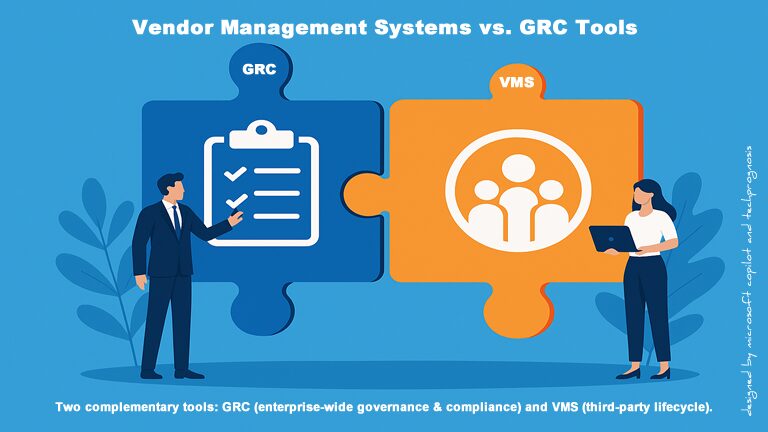
GRC platforms govern risk across the entire organization, while Vendor Management System tools specialize in managing the lifecycle of third‑party vendors.
In this article, we’ll explore the key differences and discuss how to make the right choice for your business, or organization.
Let’s face it — navigating the world of risk management can feel like a never-ending game of Tetris, where each piece is a critical component of your organization’s security and compliance structure. Whether you’re a compliance officer, a third-party risk manager, or a CISO, understanding the tools you use is vital to your organization’s ability to operate securely and efficiently.
This post is specifically for professionals who want to know how GRC tools and Vendor Management Systems platforms differ and, more importantly, how they can leverage these tools to safeguard their businesses. You may already be familiar with these terms but are unsure about which tool will best fit your needs. By the end of this post, you’ll have the knowledge to make an informed decision — or at least start the conversation.
What Are GRC Tools?
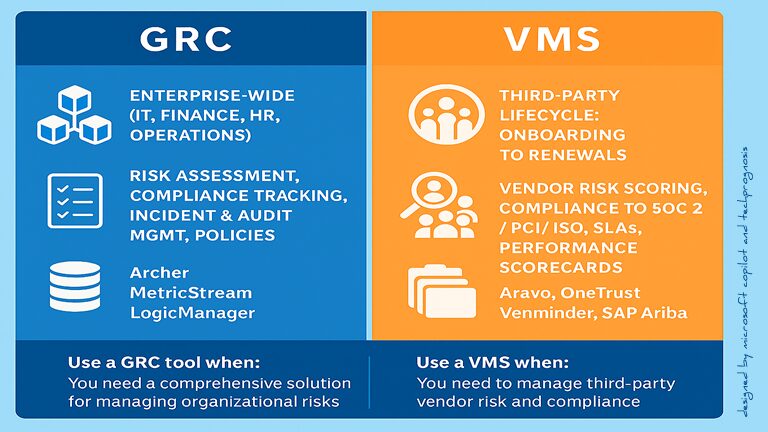
At a high level, Governance, Risk, and Compliance (GRC) tools are software platforms designed to help businesses manage enterprise-wide risk, compliance obligations, and corporate governance. These tools are ideal for organizations looking for an all-in-one solution to ensure they are meeting regulatory standards, identifying risks, and keeping business processes secure and efficient. GRC tools can support multiple areas of your organization — including IT, finance, operations, and even HR.
Core features of GRC tools include:
-
Risk assessment and management
-
Compliance tracking with various regulations (like GDPR, ISO 27001, HIPAA)
-
Incident management
-
Audit management and reporting
-
Policy creation and enforcement
Popular GRC Tools:
-
RSA Archer
-
MetricStream
-
LogicManager
- ServiceNow GRC
These tools provide an integrated framework for managing risk across your organization. They’re particularly beneficial when you’re looking at cross-departmental risks (e.g., financial, operational, or security risks), offering a holistic view of risk and compliance.
What Is a Vendor Management System (VMS)?
A Vendor Management System (VMS), on the other hand, is a more specialized tool focused on managing your relationships with third-party vendors. In today’s business landscape, many companies rely heavily on external partners, whether for IT services, supply chain management, or even HR outsourcing. This means that managing vendor risks — from compliance violations to security breaches — is more important than ever.
A Vendor Management System helps organizations:
-
Assess vendor risk and performance
-
Track compliance with industry standards (e.g., SOC 2, PCI DSS, ISO certifications)
-
Ensure contractual obligations (SLAs, data protection clauses) are met
-
Monitor ongoing vendor performance through scorecards and evaluations
Popular Vendor Management System Platforms:
-
Aravo
-
OneTrust (OneTrust straddles GRC and TPRM capabilities)
-
Venminder
-
SAP Ariba
The key distinction is that VMS tools are vendor-centric. They’re specifically designed to manage the third-party risk lifecycle, from onboarding to performance monitoring, and even contract renewals. They’re essential when you need to ensure that your third-party vendors meet your security and compliance expectations on an ongoing basis.
Key Differences Between GRC Tools and Vendor Management Systems
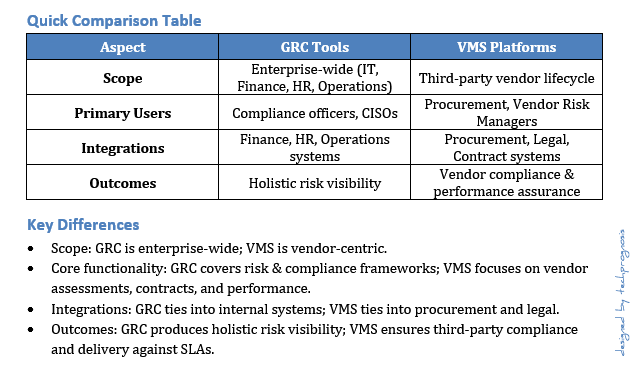
So, let’s break down the key differences between GRC tools and VMS:
-
Scope:
-
GRC tools cover broad organizational risks, including internal processes (IT, finance, HR), while VMS tools focus specifically on managing third-party vendor relationships.
-
-
Core Functionality:
-
GRC tools provide a comprehensive framework for risk and compliance management across departments, while VMS tools are focused on vendor performance, risk assessments, and contract management.
-
-
Integration:
-
GRC tools often integrate with other internal systems (e.g., finance, HR, operations), whereas VMS platforms are typically integrated with procurement and legal systems for managing vendor contracts.
-
-
Vendor-Centric vs. Enterprise-Wide:
-
VMS platforms are designed to manage vendor-specific risks and ensure that external partners adhere to compliance standards. GRC tools, on the other hand, take a more enterprise-wide approach, managing risk at all levels of the organization.
-
This post aims to make understanding these tools easy, engaging, and actionable. I’ve tried to avoid jargon, focusing instead on clear language that both technical and non-technical audiences can easily grasp. The tone is enthusiastic, inviting, and encouraging, meant to foster a sense of confidence in your ability to choose the right tool for your organization.
I’m also here to help you think critically about your tools and processes, offering you practical, real-world insights into how these systems work. Whether you’re in the early stages of considering a new system or reevaluating your existing processes, the goal is to give you clarity and confidence moving forward.
When to Use a GRC Tool vs. a Vendor Management System
-
Use a GRC tool when:
-
You’re looking for a comprehensive, organization-wide solution for managing risk across various business functions.
-
You need to track multiple types of risks (operational, financial, regulatory).
-
You need to ensure compliance with a range of industry regulations (GDPR, HIPAA, SOC 2, etc.).
-
You want a holistic view of your organization’s risk to support decision-making at the leadership level.
-
-
Use a Vendor Management System when:
-
You need to manage third-party vendor risk and track their compliance over time.
-
You want to ensure vendors are meeting security standards, contractual obligations, and performance metrics.
-
You have a significant number of external partners whose performance, security, and compliance could affect your organization’s success.
-
Conclusion: Make the Right Choice for Your Organization
Choosing the right tool isn’t just about checking boxes — it’s about optimizing your approach to risk management. Whether you opt for a GRC tool for enterprise-wide governance and risk management, or a Vendor Management System (VMS) to hone in on vendor risk, the key is to select a system that aligns with your organization’s unique needs.
If you’re unsure where to start, don’t hesitate to reach out — I’m happy to help guide you through the process, offering insights into how these tools work and which one could make the most sense for your organization.
Call to Action:
Book a 15-minute discovery call to map your current risks, vendor footprint, and must-have integrations—then get a shortlist of best-fit tools. Book your call now.
References and Resources:
- NIST Cybersecurity Framework (CSF 2.0)
- ServiceNow – Governance, Risk, and Compliance (GRC)
- OneTrust – Third-Party Risk Management
- Aravo – Third-Party Solutions
- Venminder – Third-Party Risk Management Platform
About the Author
Daniel Ihonvbere, CISM, CISSP, Qualys is a cybersecurity and risk management professional with over a decade of experience helping small businesses navigate complex compliance and security requirements. He specializes in ISO standards, FTC Safeguards, NIST frameworks, TX-RAMP, TAC 202, and other risk-based programs. Based in Central Texas, Daniel partners with organizations in Round Rock, Austin, and beyond to build practical, defensible, and scalable security strategies.
