
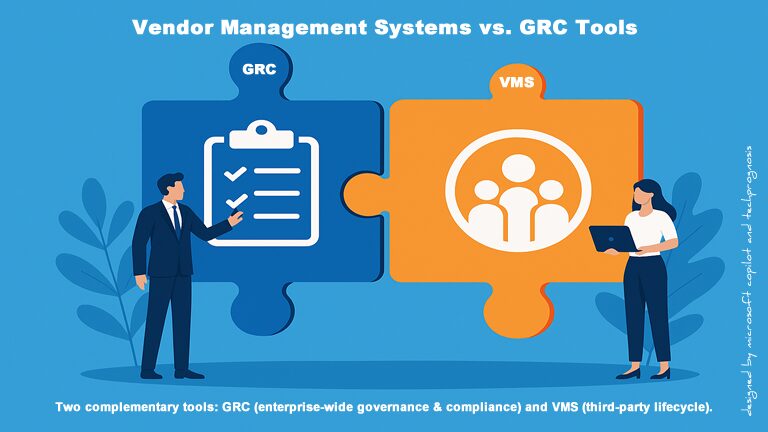
Vendor Management Systems vs. GRC Tools: Key Differences Explained

Key differences between GRC tools, and vendor management systems in terms of scope, integration, core functionality and outcomes.

Vendor Management Systems vs. GRC Tools: Understanding the Key Differences and How They Can Benefit Your Organization


In today’s fast-paced business environment, managing risk and ensuring compliance are critical. As organizations increasingly rely on third-party vendors, it’s more important than ever to have the right tools to assess and monitor vendor risk, alongside maintaining overall governance and compliance. But here’s the catch: while the terms GRC tools and Vendor Management Systems (VMS) are often used interchangeably, they serve very different purposes.

So, why does this matter?

If your organization is looking to streamline vendor management or strengthen your risk and compliance processes, it’s crucial to understand when to use GRC tools and when to turn to a Vendor Management System (VMS). Both can help manage risk, but they do so in distinct ways.

GRC platforms govern risk across the entire organization, while Vendor Management System tools specialize in managing the lifecycle of third‑party vendors.

In this article, we’ll explore the key differences and discuss how to make the right choice for your business, or organization.

Read more

Share

Third-Party Risk Management: Best Practices and Tools for Managing Vendor Risks

Icons of various partners/supply chain that need Third-party Risk Management showing shipping, transportation, airline, cloud computing, software and applications, data protection etc. with text of best practices.

The Essential Guide to Third-Party Risk Management: Best Practices and Tools for Managing Vendor Risks

Introduction: Understanding Third-Party Risk Management

With the growth of digital services, businesses increasingly rely on third-party vendors for everything from IT support to supply chain logistics. While third-party vendors help streamline processes and drive efficiencies, they also introduce additional risks. Managing these third-party risks is essential, especially as incidents like data breaches and operational disruptions are becoming more common in today’s interconnected environment.

Third-party risk management (TPRM) aims to evaluate and control the risks associated with partnering with external vendors, ensuring that these relationships align with your organization’s standards for security, compliance, and resilience. By understanding common challenges and adopting best practices, organizations can confidently manage third-party risks and safeguard their operations and customer data.

This article outlines key third-party risk management challenges, best practices, and popular tools to help you develop a solid TPRM framework tailored to your organization’s unique needs.

Read more

Share
Share
Share