
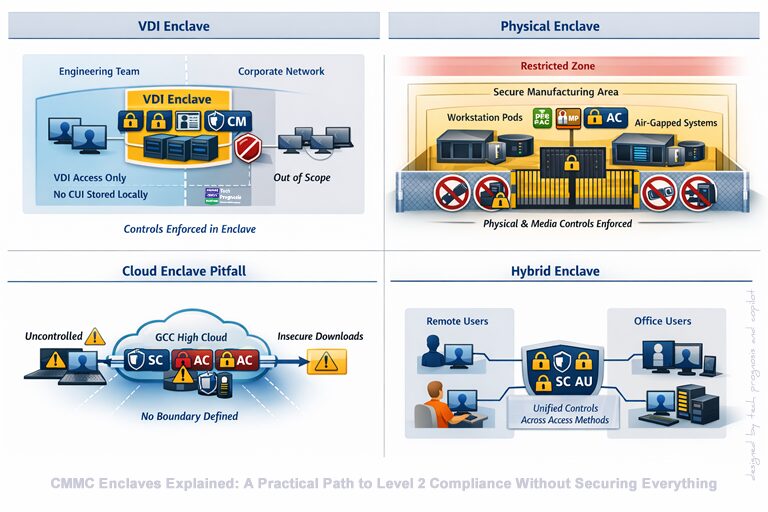
CMMC Enclaves Explained

Four-diagram visual illustrating CMMC enclaves showing Level 2 enclave models, including a VDI technical enclave, a physical manufacturing enclave, a cloud enclave pitfall, and a hybrid enclave, with control-domain icons showing how CUI is protected and scoped.

CMMC Enclaves Explained: A Practical Path to Level 2 Compliance Without Securing Everything

For many defense contractors, CMMC Level 2 feels intimidating. You hear phrases like 110 practices, NIST SP 800‑171, assessment-ready, and DoD assessments, and it can sound like your entire business needs to be rebuilt from the ground up.

Here’s the good news: it probably doesn’t.

Most small and mid-sized organizations do not need to secure their entire enterprise to meet CMMC Level 2. Instead, they can use a focused, defensible strategy called a CMMC enclave—a way to protect Controlled Unclassified Information (CUI) – the sensitive data the DoD wants you to protect – without turning the rest of the business upside down.

Think of it this way: instead of installing airport-style security in your entire office building, you build a secure vault for your valuables. That vault is your enclave.

This article explains what a CMMC enclave really is, how it applies specifically to CMMC Level 2, real-world enclave setup examples, how assessors evaluate them, and how to get started without overengineering your environment.

Read more

Share

Fake Travel Confirmation Emails That Could Breach Your Law Firm

A lady in a red dress and travel suitcase is talking with an air travel booking agent with an airplane image in the background. There is a highlight of the damage a single successful phishing attack from fake travel confirmation emails can cause.

🎯Fake Travel Confirmation Emails: Legal Professionals in Austin, Don’t Let Fake Emails Breach Your Law Firm

Planning a summer getaway? Cybercriminals are planning their next move, too—and your law firm may be the target.

As a cybersecurity professional, I see it all the time. Fake travel confirmation emails land in someone’s inbox, dressed up to look like they are from Delta, Marriott, or Expedia. The logo checks out. The formatting is perfect. The subject line sounds urgent. And then—click. Just like that, login credentials or credit card data are in the hands of cybercriminals.

In fact, 83% of organizations experienced a phishing attack in 2023, according to Proofpoint’s State of the Phish Report. And summer travel season is a gold mine for scammers.

Read more

Share
Share
Share