
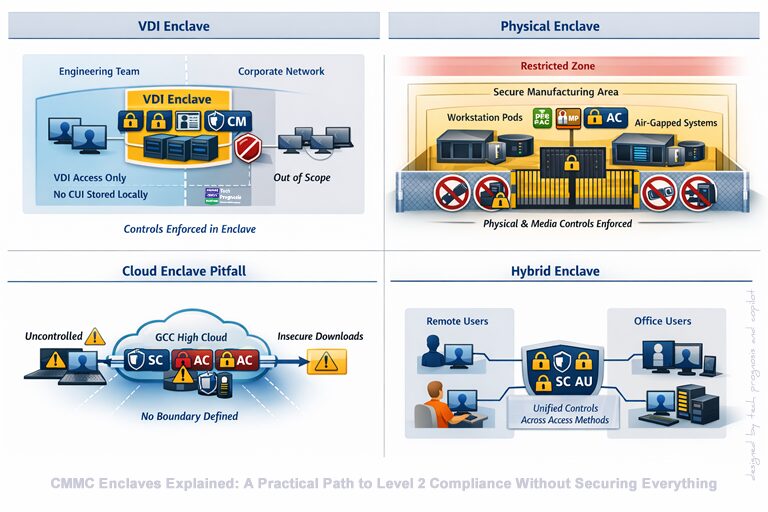
CMMC Enclaves Explained

Four-diagram visual illustrating CMMC enclaves showing Level 2 enclave models, including a VDI technical enclave, a physical manufacturing enclave, a cloud enclave pitfall, and a hybrid enclave, with control-domain icons showing how CUI is protected and scoped.

CMMC Enclaves Explained: A Practical Path to Level 2 Compliance Without Securing Everything

For many defense contractors, CMMC Level 2 feels intimidating. You hear phrases like 110 practices, NIST SP 800‑171, assessment-ready, and DoD assessments, and it can sound like your entire business needs to be rebuilt from the ground up.

Here’s the good news: it probably doesn’t.

Most small and mid-sized organizations do not need to secure their entire enterprise to meet CMMC Level 2. Instead, they can use a focused, defensible strategy called a CMMC enclave—a way to protect Controlled Unclassified Information (CUI) – the sensitive data the DoD wants you to protect – without turning the rest of the business upside down.

Think of it this way: instead of installing airport-style security in your entire office building, you build a secure vault for your valuables. That vault is your enclave.

This article explains what a CMMC enclave really is, how it applies specifically to CMMC Level 2, real-world enclave setup examples, how assessors evaluate them, and how to get started without overengineering your environment.

Read more

Share

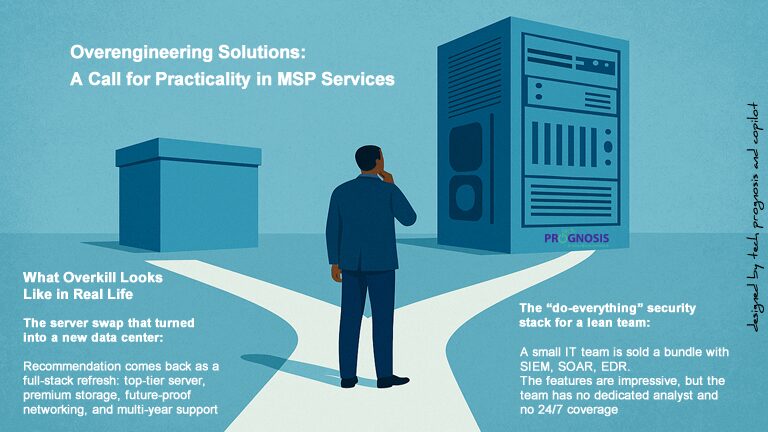
Overengineering Solutions: A Call for Practicality in MSP Services

Illustration of a business professional standing at a crossroads, deciding between a simple box and a large server tower, symbolizing overengineering versus practical solutions.

Too many managed service providers (MSPs) still prescribe solutions that are bigger, pricier, and more complex than what clients actually need. Overengineering solutions not only wastes budget—it also slows teams down, erodes trust, and makes day‑to‑day operations harder. The fix is simple, but it takes discipline: start with the business problem, apply a risk‑based lens, right‑size the solution, and co‑design with the people who will live with it.

This post shares real‑world examples, root causes, and a practical framework you can use today.

Why This Question on Overengineering Solutions Still Matters

In a world of nonstop product launches, aggressive vendor marketing, and a constant drumbeat of “more features, more protection,” it’s easy to equate complexity with quality. But for many organizations—especially small and mid‑size businesses—large, layered solutions can be the wrong fit. They can consume scarce budgets, demand skills that the team doesn’t have, and introduce new points of failure.

Right‑sizing solutions is not about cutting corners. It’s about delivering outcomes that match the organization’s goals, resources, and risk tolerance. It’s about respect: the kind that honors each client’s constraints and aspirations. And it’s about trust—because teams remember when you take care to recommend what works, not simply what sells.

Read more

Share
Share
Share