
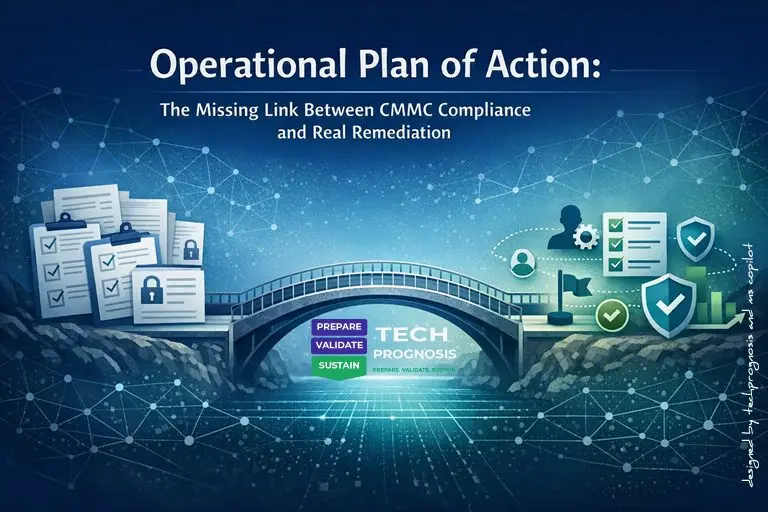
Operational Plan of Action in CMMC Compliance

Cybersecurity compliance bridge connecting CMMC documentation to remediation ownership, validation, and risk reduction with the text “Operational Plan of Action”.

Operational Plan of Action: The Missing Link Between CMMC Compliance and Real Remediation

Many DIB contractors understand the System Security Plan (SSP) and assessment Plan Of Action & Milestones (POA&M), but the Operational Plan of Action is where CMMC readiness becomes real remediation. This article explains what it is, why it matters, and how to use it as an ongoing cybersecurity management process.

In CMMC readiness conversations, the System Security Plan often gets most of the attention. The POA&M also receives plenty of discussion, especially because of the rules around conditional status and post-assessment remediation. But one requirement deserves more attention across the Defense Industrial Base: the Operational Plan of Action.

At first glance, it may sound like another compliance artifact. In practice, it asks a much more operational question: when your organization discovers a cybersecurity deficiency or vulnerability, how do you make sure it actually gets fixed?

That question matters because CMMC readiness should not stop at documentation. It should create a repeatable way to identify weaknesses, assign responsibility, drive remediation, validate completion, and sustain improvement over time.

Read more

Share

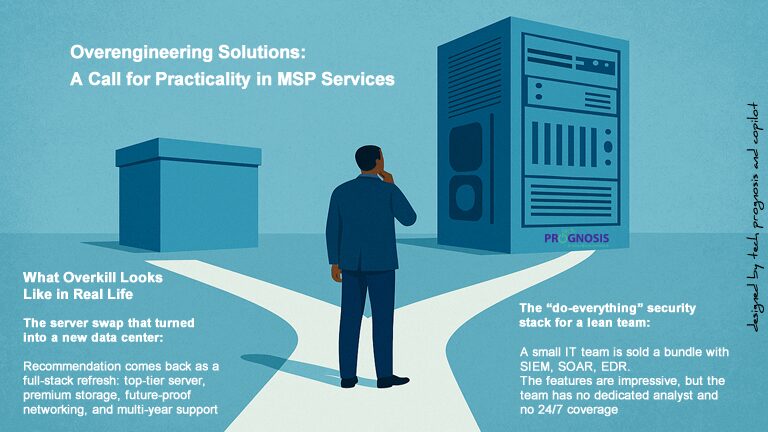
Overengineering Solutions: A Call for Practicality in MSP Services

Illustration of a business professional standing at a crossroads, deciding between a simple box and a large server tower, symbolizing overengineering versus practical solutions.

Too many managed service providers (MSPs) still prescribe solutions that are bigger, pricier, and more complex than what clients actually need. Overengineering solutions not only wastes budget—it also slows teams down, erodes trust, and makes day‑to‑day operations harder. The fix is simple, but it takes discipline: start with the business problem, apply a risk‑based lens, right‑size the solution, and co‑design with the people who will live with it.

This post shares real‑world examples, root causes, and a practical framework you can use today.

Why This Question on Overengineering Solutions Still Matters

In a world of nonstop product launches, aggressive vendor marketing, and a constant drumbeat of “more features, more protection,” it’s easy to equate complexity with quality. But for many organizations—especially small and mid‑size businesses—large, layered solutions can be the wrong fit. They can consume scarce budgets, demand skills that the team doesn’t have, and introduce new points of failure.

Right‑sizing solutions is not about cutting corners. It’s about delivering outcomes that match the organization’s goals, resources, and risk tolerance. It’s about respect: the kind that honors each client’s constraints and aspirations. And it’s about trust—because teams remember when you take care to recommend what works, not simply what sells.

Read more

Share
Share
Share