Desktop Virtualization: Benefits for SMB Manufacturing

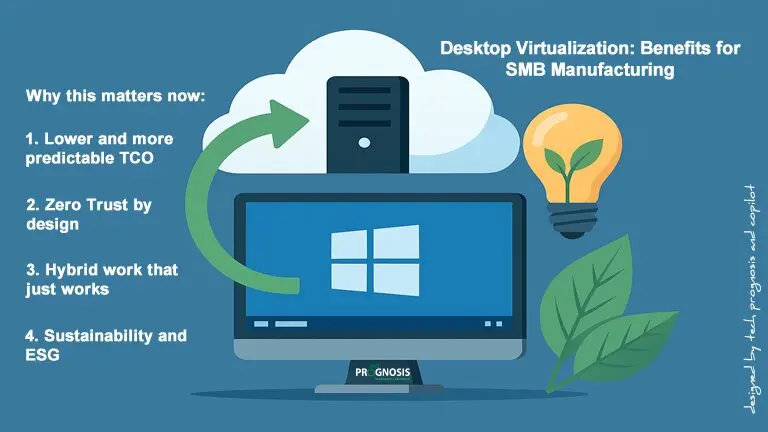
Illustration of desktop virtualization concept showing a computer screen with Windows logo, cloud server, green arrow, light bulb, and leaves symbolizing sustainability.

The Future of Work is Here: How Modern Desktop Virtualization Empowers Your Team (and Your Bottom Line)

Imagine this: Your manufacturing team needs to access critical CAD software from the shop floor, the home office, and a client site—all in the same week. Or your accounting firm just onboarded five seasonal auditors who need secure access to sensitive financial data without waiting weeks for new laptops. Sound familiar? Modern desktop virtualization can empower your team (and your bottom line).

Desktop virtualization makes these scenarios not just possible, but simple. And the best part? It’s no longer reserved for enterprise giants with massive IT budgets. Today’s solutions are designed with small and mid-sized businesses in mind.

Let’s explore how modern desktop virtualization can transform the way your organization works—without the tech headaches.


What Is Desktop Virtualization, Anyway?

Think of desktop virtualization as running your computer “in the cloud” instead of on a physical machine sitting under your desk. Your team members can access their familiar Windows desktop, applications, and files from almost any device—whether that’s a laptop at home, a tablet on a job site, or a thin client terminal on the manufacturing floor.

Read more

Share

STIGs: A Comprehensive Guide with Use Cases and Best Practices

Image of realistic vector composition with stack of colorful books with eyeglasses, home plants, and teacup simulating Security Technical Implementation Guides - STIGs

Mastering DoD STIGs: A Comprehensive Guide with Use Cases and Best Practices

Cybersecurity has become a paramount concern for organizations across all sectors. Among the various standards and guidelines developed to ensure robust security practices, the Department of Defense (DoD) Security Technical Implementation Guides (STIGs) stand out for their comprehensive and stringent requirements.

This article aims to demystify DoD STIGs, explore their importance, examine common challenges in their implementation, and offer practical best practices. Whether you’re a seasoned IT professional or a non-technical stakeholder, this guide will help you understand the vital role STIGs play in securing information systems.

Read more

Share

Protecting Patient Data: A Comprehensive Guide to Mitigating Healthcare Security Risks

Image of healthcare showing abstract concept illustration of protecting patient data with a practitioner-pharmacists using secure access to medical records.

In a rapidly evolving healthcare landscape, the digital transformation of patient data and record systems has become essential for improving patient care and operational efficiency. However, with these technological advancements come a range of security risks that must be diligently addressed.

In this blog article, we will explore the potential threats and risks associated with healthcare patient data security and propose mitigation strategies. We will also consider these in the context of the Health Insurance Portability and Accountability Act (HIPAA), which sets stringent standards for safeguarding patient information.

Read more

Share
Share
Share