COBIT 2019 Goals Cascade: A Blueprint for Success

Image showing the five domains of COBIT 2019: EDM, APO, BAI, DSS, and MEA; and a list of the goals cascade: stakeholder needs, enterprise goals, alignment goals, and governance and management objectives.

Navigating Success with COBIT 2019: Linking Enterprise Goals and Management Practices

Introduction: Demystifying COBIT 2019

COBIT 2019, which stands for Control Objectives for Information and Related Technologies, is your guiding light in the realm of information and technology management. It’s a widely acknowledged framework designed to empower organizations in their journey to effectively oversee IT-related processes. Its ultimate mission? To help organizations realize value from their IT endeavors, efficiently manage risks, and optimize their resources.

Let’s explore how COBIT 2019 achieves this by traversing the path of enterprise goals, alignment goals, and management practices.

The Goals Cascade: Linking Ambitions to Actions

At the core of COBIT 2019 lies the concept of the “Goals Cascade.” This cascade is akin to a bridge that connects your grandest aspirations with the everyday activities that bring them to life.

It comprises four levels, each serving a specific purpose:

Read more

Share

Enhancing Cybersecurity: Implementing NIST Cybersecurity Framework (CSF) with COBIT 2019

Collaboration concept with human characters and artificial intelligence elements, simulating the NIST Cybersecuriy Framework (CSF) and the Control Objectives for Information and Related Technologies (COBIT) 2019 framework working together.

Today’s digital landscape is rapidly evolving and organizations face an ever-increasing threat of cyberattacks as a quick scan of news headlines about breaches and data leaks, including the recent cybersecurity attack on MGM shows. To address this challenge, it is crucial for businesses to adopt comprehensive cybersecurity frameworks. Two such frameworks that can work harmoniously to fortify your organization’s cybersecurity posture are the National Institute of Standards and Technology’s Cybersecurity Framework (NIST CSF) and the Control Objectives for Information and Related Technologies (COBIT 2019).

In this article, we will explore how an organization can effectively implement the NIST CSF using COBIT 2019, promoting security, compliance, and resilience.

Understanding the NIST Cybersecurity Framework (CSF)

The NIST CSF, developed by the National Institute of Standards and Technology, is a widely accepted cybersecurity framework that offers a structured approach to managing and reducing cybersecurity risk. It is built on five core functions: Identify, Protect, Detect, Respond, and Recover. These functions provide a holistic view of cybersecurity management and assist organizations in identifying vulnerabilities, protecting assets, and responding to security incidents.

Read more

Share

OCTAVE Methodology for Information and Technology Governance

Image concept icons of a datacenter environment showing a folder secured with a fingerprint, a laptop with "Data Verification" written on it, and a person sitting a cubicle with a golden key on the floor.

Introduction

In today’s digital age, information and technology governance are crucial for the success and security of any business, regardless of its size. Small businesses, in particular, often face unique challenges when it comes to managing their IT resources and safeguarding their sensitive data. One effective approach to address these challenges is the OCTAVE (Operationally Critical Threat, Asset, and Vulnerability Evaluation) methodology. In this article, we will explore how small businesses can leverage the OCTAVE methodology to enhance their information and technology governance.

What is OCTAVE?

The OCTAVE methodology is a comprehensive framework developed by the Software Engineering Institute (SEI) at Carnegie Mellon University. It is designed to help organizations identify and manage information security risks effectively. OCTAVE takes a systematic and risk-based approach, focusing on both technical and non-technical aspects of information and technology governance.

Read more

Share

OCTAVE Allegro: A Comprehensive Guide to Cybersecurity Risk Assessment

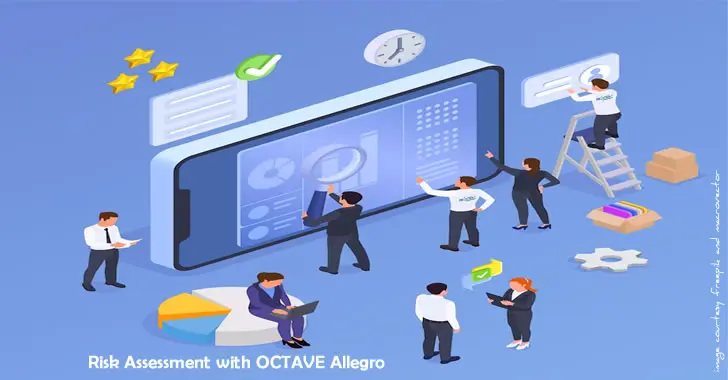
Image of people working in a simulated OCTAVE Allegro risk assessment environment showing a man in a dark suit holding a magnifying glass, and a woman working on a laptop.

Introduction

The Operationally Critical Threat, Asset, and Vulnerability Evaluation (OCTAVE) Allegro methodology is an effective approach to address the challenges organizations face in today’s fast-paced business landscape. Businesses increasingly face a multitude of risks that can disrupt operations, damage reputation, and lead to significant financial losses. If you add to that the ever-increasing number of cyber threats, organizations must be proactive in identifying and mitigating potential risks.

OCTAVE Allegro offers a robust and adaptable approach for organizations to assess and mitigate cybersecurity risks.

In this article, we will delve into the origins, methodologies, and components of OCTAVE Allegro, and discuss why organizations should consider adopting it for their cybersecurity risk assessment needs. We will also provide clear implementation steps to make the process understandable and achievable for organizations of all sizes.

Section 1: The Origin of OCTAVE Allegro

OCTAVE Allegro is an evolution of the original OCTAVE methodology, which was developed at the Software Engineering Institute (SEI) at Carnegie Mellon University. The SEI introduced OCTAVE in the late 1990s as a comprehensive approach to managing information security risks.

Read more

Share

Understanding NIST 800-30: A Guide to Effective Risk Management


Image showing the essential steps of the core of NIST 800-30: the Risk Management Framework - prepare, categorize, select, implement, assess, authorize, and monitor.

More than ever, organizations must balance a rapidly evolving cybersecurity and privacy threat landscape against the need to fulfill business requirements on an enterprise level. Organizations, both big and small, face a myriad of threats that can compromise sensitive information and disrupt business operations. To tackle these challenges, the National Institute of Standards and Technology (NIST) has developed a comprehensive framework known as NIST 800-30, which provides a structured approach to risk management.

In this article, we will explore the essential components of NIST 800-30 and shed light on how it can help organizations bolster their cybersecurity efforts.

What is NIST 800-30?

NIST 800-30 is a vital document within NIST’s Special Publication 800 series that focuses on risk management. It provides organizations with a structured approach to identify, assess, and manage cybersecurity risks effectively.

This framework empowers organizations to make informed decisions and allocate resources efficiently to protect their information and systems.

Read more

Share

Achieving Comprehensive GRC with the OCTAVE Methodology


Image of a cyber-security flowchart with hacking activity data-protection icons.

The OCTAVE methodology is a risk management threat model that can be used to implement GRC (governance, risk, and compliance) in an organization. It is a flexible and adaptable methodology that can be tailored to the specific needs of any organization.

The business landscape today is rapidly changing, and cybersecurity threats are becoming increasingly complex. Ensuring that an organization operates efficiently while managing risks and complying with regulations is essential for success.

This is where Governance, Risk, and Compliance (GRC) comes into play.

GRC is a holistic approach that enables organizations to navigate the complex web of regulations, risks, and internal policies effectively.

One highly regarded method for implementing GRC is the OCTAVE (Operationally Critical Threat, Asset, and Vulnerability Evaluation) methodology.

In this article, we’ll explore how organizations can use the OCTAVE methodology to build a robust GRC framework.

Read more

Share
Share
Share