Risk Authorization Decisions in the NIST Risk Management Framework

Cybersecurity risk authorization decisions isometric concept showing businessmen shaking hands, a huge tablet with signatures, a secure padlock, and blockchain technology.

Why Your Business Can’t Afford to Ignore Cybersecurity Risk Authorization Decisions: A Round Rock Business Leader’s Guide to the NIST Risk Management Framework

How Central Texas organizations can protect sensitive data and avoid million-dollar mistakes through proper security risk authorization decisions


If your Round Rock, Austin, or Cedar Park business handles sensitive financial data, healthcare records, or customer information, there’s a critical decision-making process that could make or break your organization’s future. It’s called the cyber risk authorization decision within the NIST Risk Management Framework (RMF), and understanding it could save your company from devastating breaches, regulatory fines, and reputational damage.

Let me share a story that illustrates why this matters to every business leader from Georgetown to San Marcos.

Read more

Share

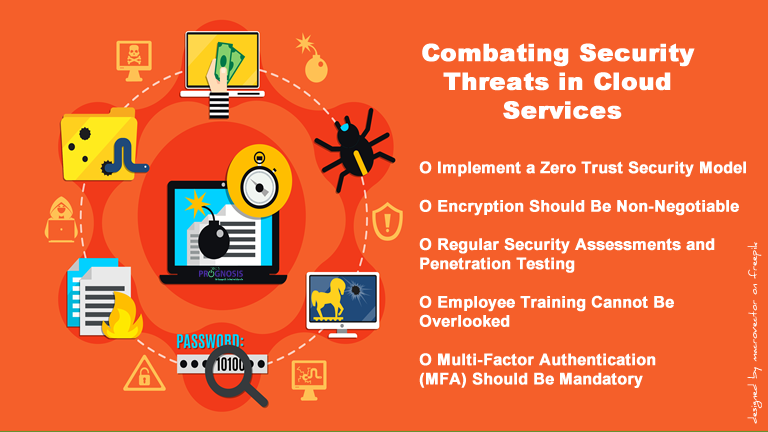
Cloud Security Threats and Mitigation: A Guide for Financial Services in Austin, Texas

Cloud security threats that target financial services in Austin, Texas like spam threats, hackers, fraud, password thefts, and mitigation solutions like email security, firewalls, data security

Combating Cloud Security Threats in Cloud Computing: A Guide to Cloud Security for Austin’s Financial Services

As someone who’s spent over a decade helping financial institutions navigate the complex world of cybersecurity, I’ve watched Austin’s financial services sector transform dramatically. From the bustling tech corridors along MoPac to the financial districts downtown, our city’s banks, credit unions, and fintech startups are increasingly moving their operations to the cloud. But with this shift comes the critical questions I hear almost daily:  “How do we combat security threats in cloud computing”, and “How do we keep our customers’ financial data safe in the cloud?”

Let me share what I’ve learned about security threats in our industry, drawing from real experiences right here in Central Texas, particularly as artificial intelligence reshapes how we think about data protection and financial services.

Read more

Share

Information Technology (IT) Risk Analysis: Policy Reviews and Risk Reports Protect Your Organization

Business information technology or IT risk analysis concept isometric vector illustration process working with database on data center system for diagrams of management statistics and operational reports.

Understanding Information Technology Risk Analysis: How Policy Reviews and Risk Reports Protect Your Organization

Organizations face an ever-growing array of cybersecurity threats. From ransomware attacks that can cripple operations to data breaches that expose sensitive customer information, the stakes have never been higher. This reality makes information technology risk analysis not just a technical necessity but a fundamental business practice that can determine an organization’s survival and success.

Risk analysis in IT involves systematically identifying, evaluating, and prioritizing potential threats to an organization’s information assets. At its core, this process helps organizations understand what could go wrong, how likely these scenarios are, and what impact they might have on business operations. One of the most effective approaches to conducting this analysis involves reviewing information security policy documents against established industry standards and regulatory requirements, then translating findings into clear, actionable risk reports.

Read more

Share

The OCTAVE-S Risk Assessment Methodology for Small Organizations

Male figure holding a large magnifying glass over a documents folder with the application process of the OCTAVE-S methodology, and a risk measurement scale.

The OCTAVE (Operationally Critical Threat, Asset, and Vulnerability Evaluation) methodology is a risk assessment and management framework designed to help organizations identify, assess, and mitigate information security risks. It was developed by the Software Engineering Institute (SEI) at Carnegie Mellon University. OCTAVE-S is a flexible approach that offers different variants to suit various organizational sizes and needs. The two primary variants of OCTAVE are OCTAVE-S (S for Simplified) and OCTAVE-Allegro.

Risk management methodologies should include the suitability to the size of your organization. There are methodologies that are designed for the small to medium business, like certain OCTAVE variants. But most expect the organization to be of a substantial size and complexity. You may also look at the maturity of your organization’s risk management program. If the organization has been conducting risk management for a significant period, it may be better suited to undertake a more complex and robust methodology.
Those organizations newer to risk management, may prefer simpler approaches.

Below, I’ll provide an overview of both variants and then discuss which one is best suited for small organizations, followed by a detailed application.

Read more

Share

Risk Registers: The Cornerstone of Effective Risk Management

Image of isometric composition of cybersecurity risks and risk management showing icons of cracked shield, warning signs, money, computer, smartphone, clipboard and document with check boxes simulating risk registers.

The Importance of Risk Registers in Effective Risk Management

In today’s dynamic business landscape, organizations of all sizes and sectors face various risks that could potentially derail their operations. From financial uncertainties and regulatory compliance challenges to cybersecurity threats and operational disruptions, managing these risks is critical for survival and growth. One of the most effective tools in the arsenal of risk management are risk registers. As organizations strive to navigate uncertainties, well-maintained risk registers emerge as an indispensable tool in managing and mitigating risks.

This blog will delve into the concept of risk registers, explore their benefits, and provide practical examples across various sectors. We will also address common challenges organizations face and offer best practices for maximizing the effectiveness of risk registers. Additionally, we’ll recommend popular tools that can help streamline the risk management process.

Read more

Share

Information Security Risk Assessment: Best Practices for SMBs

Image of information security risk assessment concept with speedometer and people and graph chart analysis data information.

Understanding Information Security Risk Assessment: A Guide for Small and Medium-Sized Businesses

Today, protecting your business from cyber threats is more crucial than ever. Cybersecurity breaches can lead to significant financial losses, reputational damage, and even legal consequences. For small and medium-sized businesses (SMBs), the stakes are particularly high since they often lack the extensive resources of larger enterprises. This is where information security risk assessment comes into play. By understanding and implementing effective risk assessments, SMBs can safeguard their operations and ensure long-term success.

This comprehensive guide will walk you through the basics of information security risk assessment, using business-specific examples to illustrate key points. We’ll also share best practices that are practical and actionable, ensuring that your business can protect its valuable data without requiring deep technical knowledge.

Read more

Share
Share
Share