Risk Registers: The Cornerstone of Effective Risk Management

Image of isometric composition of cybersecurity risks and risk management showing icons of cracked shield, warning signs, money, computer, smartphone, clipboard and document with check boxes simulating risk registers.

The Importance of Risk Registers in Effective Risk Management

In today’s dynamic business landscape, organizations of all sizes and sectors face various risks that could potentially derail their operations. From financial uncertainties and regulatory compliance challenges to cybersecurity threats and operational disruptions, managing these risks is critical for survival and growth. One of the most effective tools in the arsenal of risk management are risk registers. As organizations strive to navigate uncertainties, well-maintained risk registers emerge as an indispensable tool in managing and mitigating risks.

This blog will delve into the concept of risk registers, explore their benefits, and provide practical examples across various sectors. We will also address common challenges organizations face and offer best practices for maximizing the effectiveness of risk registers. Additionally, we’ll recommend popular tools that can help streamline the risk management process.

Read more

Share

Information Security Risk Assessment: Best Practices for SMBs

Image of information security risk assessment concept with speedometer and people and graph chart analysis data information.

Understanding Information Security Risk Assessment: A Guide for Small and Medium-Sized Businesses

Today, protecting your business from cyber threats is more crucial than ever. Cybersecurity breaches can lead to significant financial losses, reputational damage, and even legal consequences. For small and medium-sized businesses (SMBs), the stakes are particularly high since they often lack the extensive resources of larger enterprises. This is where information security risk assessment comes into play. By understanding and implementing effective risk assessments, SMBs can safeguard their operations and ensure long-term success.

This comprehensive guide will walk you through the basics of information security risk assessment, using business-specific examples to illustrate key points. We’ll also share best practices that are practical and actionable, ensuring that your business can protect its valuable data without requiring deep technical knowledge.

Read more

Share

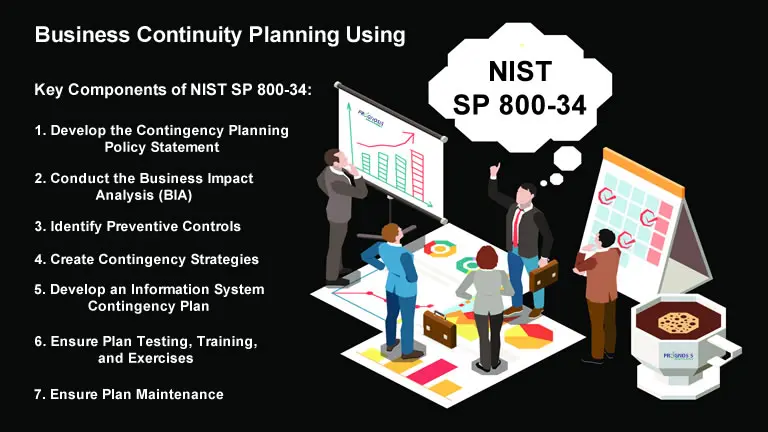
Business Continuity Planning Using NIST SP 800-34

Concept illustration of business continuity planning showing group of workers, NIST SP 800-34 thought bubbles, calendar, planning boards, and texts of the key components of the NIST SP 800-34 Framework: Develop the Contingency Planning Policy Statement, Conduct the Business Impact Analysis (BIA), Identify Preventive Controls, Create Contingency Strategies, Develop an Information System Contingency Plan, Ensure Plan Testing, Training, and Exercises, and Ensure Plan Maintenance.

Mastering Business Continuity Planning: A Guide Using NIST SP 800-34

In today’s fast-paced and interconnected world, businesses face an array of potential disruptions—from natural disasters and cyber-attacks to pandemics and supply chain failures. Ensuring that your organization can continue operations during and after such events is crucial. This is where Business Continuity Planning (BCP) comes in.

By using the National Institute of Standards and Technology’s (NIST) Special Publication (SP) 800-34 as our frame of reference, this comprehensive guide will delve into the principles of BCP as outlined in NIST SP 800-34, explore sector-specific examples, address common challenges, and present best practices to help your organization stay resilient.

Read more

Share
Share
Share