Protecting Patient Data: A Comprehensive Guide to Mitigating Healthcare Security Risks

Image of healthcare showing abstract concept illustration of protecting patient data with a practitioner-pharmacists using secure access to medical records.

In a rapidly evolving healthcare landscape, the digital transformation of patient data and record systems has become essential for improving patient care and operational efficiency. However, with these technological advancements come a range of security risks that must be diligently addressed.

In this blog article, we will explore the potential threats and risks associated with healthcare patient data security and propose mitigation strategies. We will also consider these in the context of the Health Insurance Portability and Accountability Act (HIPAA), which sets stringent standards for safeguarding patient information.

Read more

Share

PCI DSS 4.0: Strategies for Addressing Requirements


Security icons set showing strategies for addressing PCI DSS 4.0 requirements like Internet security, online payments protection, bank account protection, and data encryption.

A Comprehensive Guide to Addressing PCI DSS 4.0 Requirements: Strategies and Best Practices for Small and Medium-Sized Businesses

As digital transactions continue to rise, ensuring the security of cardholder data has never been more critical. For businesses handling payment card information, compliance with the Payment Card Industry Data Security Standard (PCI DSS) is not just a legal necessity but a key component of maintaining customer trust and operational integrity. The latest version, PCI DSS 4.0, introduces new requirements and enhancements designed to bolster payment security.

This guide explores practical strategies and best practices for small and medium-sized businesses (SMBs) to navigate these requirements effectively.

Read more

Share

Navigating Compliance and Ethics: A Guide for Every Business

Image concept of compliance and ethics, law, legal regulation with document scales, gavel, seal stamp and pencil.

In today’s complex business landscape, two crucial pillars seem to increasingly stand tall: compliance and ethics. These elements serve as the moral compass and regulatory framework guiding organizations toward responsible and sustainable practices. Whether you’re a seasoned professional or a budding entrepreneur, understanding the nuances of compliance and ethics is crucial for fostering a culture of trust, transparency, and responsibility within your workplace.

In this comprehensive guide, we delve into everything you need to know about compliance and ethics, from key concepts to practical examples, illuminating their significance and how they intertwine to shape the corporate world.

Read more

Share

Covered Entity Concept Under HIPAA: What You Need to Know

Image showing an electronic health record or EHR system on a laptop with the definidtion of a what a covered entity is, according to HIPAA.

A covered entity under HIPAA is an institution or an organization that must comply with the HIPAA Privacy Rule, the HIPAA Security Rule, and the HIPAA Breach Notification Rule.

If you are a business owner in the Austin, Texas area, you may have heard of the concept of covered entity under HIPAA, the Health Insurance Portability and Accountability Act of 1996.

HIPAA is a federal law that protects the privacy and security of health information and gives patients certain rights regarding their health records. HIPAA also sets standards for how health information is transmitted and stored electronically.

But what does HIPAA and its covered entity mandate mean for your business? Do you have to comply with HIPAA rules? How can you avoid HIPAA violations and penalties? These are some of the questions that we will answer in this blog post, written by a local expert HIPAA consultant.

Read more

Share

Strengthening Your Organization’s Security with CIS Critical Security Controls

Ilustration showing a man and a woman with laptops performing a system audit with the five CIS Critical Security Controls outlined on a page in a binder.

In today’s digital landscape, where security threats loom large, safeguarding your organization’s sensitive data and digital assets is paramount. Fortunately, the Center for Internet Security (CIS) Critical Security Controls offers a practical roadmap to bolster your security posture.

In this article, we will explore how any organization, regardless of size or industry, can enhance its security using the CIS Critical Security Controls.

What are the CIS Security Controls?

The CIS Critical Security Controls (CIS Controls) are a prescriptive, prioritized, and simplified set of best practices that you can use to strengthen your organization’s cybersecurity posture. Today, thousands of cybersecurity practitioners from around the world use the CIS Controls and/or contribute to their development via a community consensus process.

Read more

Share

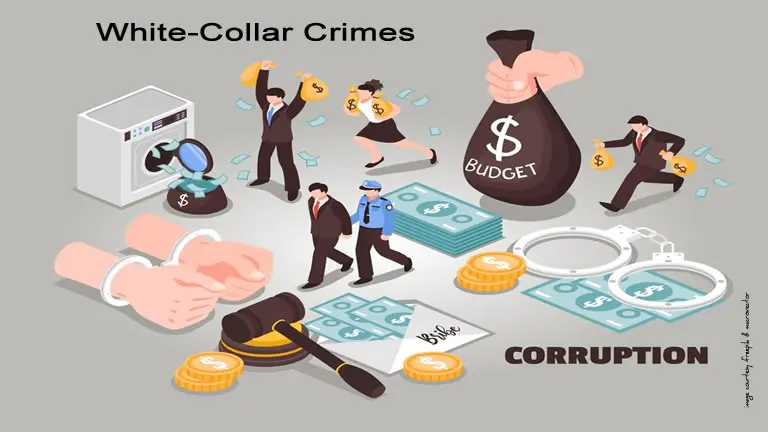
Navigating White-Collar Crimes: Unveiling the Lack of Recognition Theory

Image of handcuffs, a gavel and icons symbolizing money laundering, bribery, embezzlement, and the words "White-Collar Crimes" and "Corruption" written on a gray background.

Decoding White-Collar Crimes: Unveiling the Lack of Recognition Theory Through Real-Life Scenarios

In the complex world of corporate conduct, the “Lack of Recognition” theory stands out as a compelling force behind unintentional white-collar crimes. This theory not only encompasses employees feeling undervalued but also sheds light on situations where individuals inadvertently breach laws, rules, or regulations.

To explore this concept, consider the following white-collar crime definition:

What Are White-Collar Crimes?

White collar crimes refer to non-violent crimes committed through deceptive practices, for the purpose of financial gain. Typically, white-collar crimes are committed by business people who are able to access large amounts of money, though the term is sometimes applied to others who pilfer monies in other circumstances. White collar crimes are non-violent, and are committed by a broad range of activities, such as insider trading.

In this blog post, we’ll delve into the challenges posed by the Lack of Recognition theory, exploring strategies that compliance officers can deploy to mitigate white-collar crime with the help of real-life examples and case studies to bring these concepts to life.

Read more

Share
Share
Share