Security Information and Event Management (SIEM) and Regulated Industries

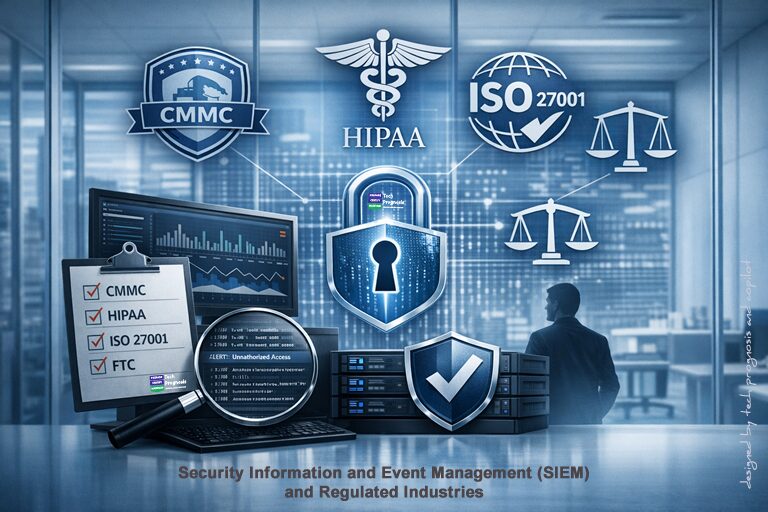
A digital illustration showing cybersecurity, Security Information and Event Management (SIEM) and compliance concepts, including a glowing lock at the center, surrounded by icons for CMMC, HIPAA, ISO 27001, and FTC related compliance, with dashboards, servers, checklists, and security symbols representing monitoring, auditing, and regulatory alignment.

Understanding SIEM in 2026: Limitations—and How to Build a Compliant, Outcome‑Driven Detection Program

Executive summary. Security Information and Event Management (SIEM) remains central to modern detection and response, but the playing field has evolved: cloud‑first estates, identity‑centric attacks, and new or strengthened rules (CMMC, HIPAA Security Rule enforcement practices, FTC Safeguards updates, ISO/IEC 27001:2022, and NIST CSF 2.0) raise the bar for logging, monitoring, and evidence. SIEM alone isn’t enough; you’ll need smart log source prioritization, detection engineering mapped to frameworks like MITRE ATT&CK, and automation you can trust (SOAR), all tuned to produce defensible evidence for audits and assessments.


What is Security Information and Event Management (SIEM) today (and what it isn’t)

A SIEM centrally collects and analyzes logs and events across systems, networks, applications, identities, and cloud services to help analysts detect, investigate, and report incidents. It’s often paired with Security Orchestration, Automation, and Response or SOAR to orchestrate and automate response actions.

SOAR (security orchestration, automation, and response) provides playbooks and automation for triage and remediation; it does not replace analytic rigor or governance.

Governments and industry recently published pragmatic guidance for implementing SIEM/SOAR, highlighting benefits (visibility, faster response) and pitfalls (data normalization, coverage, resource intensity).

Where SIEM fits in frameworks: NIST CSF 2.0 explicitly expects continuous monitoring and event logging outcomes (e.g., PR.PS‑04 requires that log records are generated and made available for continuous monitoring)—functions typically enabled by SIEM + SOAR.

Read more

Share

HIPAA Readiness in Round Rock, TX: A Virtual CISO’s Guide to Compliance for Healthcare Providers

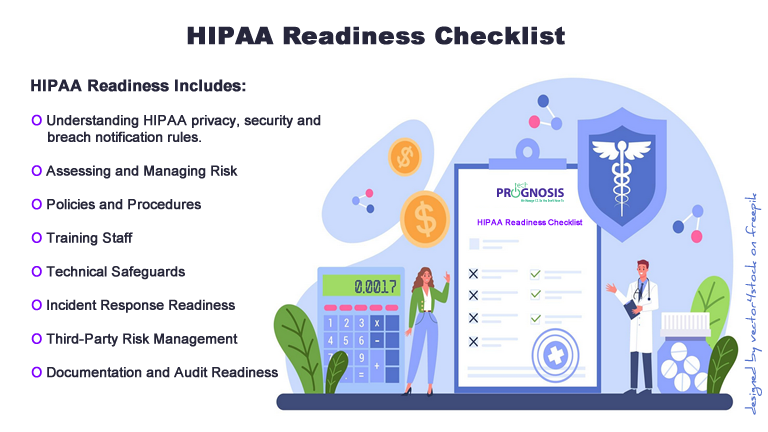
Flat vector illustration concept simulating HIPAA readiness with a checklist, a tiny doctor and nurse, and text of what readiness includes.

HIPAA Readiness in Round Rock, TX: A Virtual CISO’s Guide to Compliance for Healthcare Providers and PHI Handlers


Author: Daniel Ihonvbere, Virtual Chief Information Security Officer (vCISO)
Reading Time: ~10 minutes
Ideal For: Healthcare administrators, clinic managers, compliance officers, IT leaders, and business associates working with PHI in Round Rock, Austin, Georgetown, Pflugerville, and surrounding Texas cities.


When it comes to HIPAA compliance, the stakes are high—and not just in terms of fines. Patient trust, operational integrity, and even your practice’s reputation hinge on your ability to secure Protected Health Information (PHI) and maintain regulatory alignment.

As a Virtual CISO guiding organizations in and around Round Rock, Texas, I’ve seen firsthand that HIPAA compliance is not a one-time checkbox—it’s an ongoing, risk-based journey.

As your virtual CISO, I’ll guide you through a systematic HIPAA compliance journey that balances security requirements with business operations. This post breaks down what HIPAA readiness means and provides a comprehensive and actionable roadmap to achieve and sustain HIPAA readiness, tailored to healthcare entities and their partners.

Let’s walk through the 10 essential steps of becoming HIPAA-ready—with clarity, confidence, and compliance.

Read more

Share

Windows 10 End of Support: What Happens To Healthcare Applications

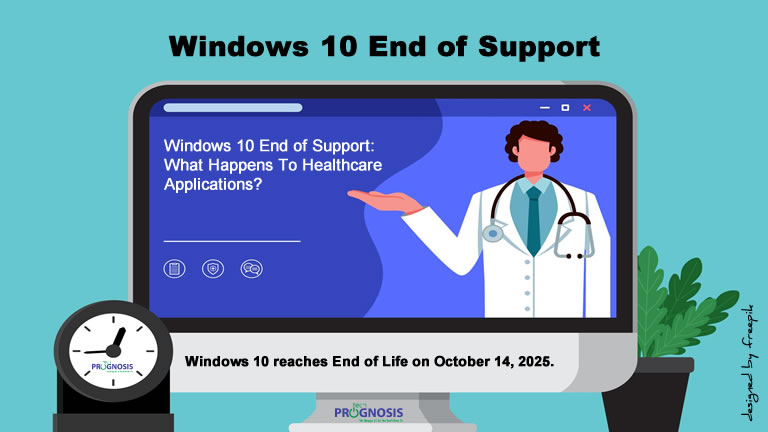
A computer desktop monitor showing an image of a doctor with a stethoscope around his neck gesturing toward a text on the screen asking the question: "Windows 10 End of Support: What Happens to Healthcare Applications”

What Happens to Healthcare Applications After Windows 10 End of Support?

A Cybersecurity Expert’s Guide for Clinics, Practices, and Health Systems

📅 October 14, 2025 is more than just a date on the calendar. It’s when Windows 10 reaches end of life, and with that, your healthcare IT environment could be at serious risk.

Whether you’re a small practice using EHR software on a few desktops or a larger provider with integrated patient care systems, the end of Windows 10 support could expose your patients’ data, impact compliance with HIPAA, and disrupt care delivery.

If you’re still using Windows 10 after the cutoff date, it’s not just your operating system that will be at risk – your critical healthcare applications could be affected too. Let’s break down what you need to know.

Read more

Share

HIPAA And HITECH: Navigating Healthcare Data Protection

Isometric image of a doctor online interacting with a patient through a smartphone, a prescription form and the text “HIPAA and HITECH”.

Understanding the Difference Between HIPAA and HITECH: A Comprehensive Guide

HIPAA and HITECH are cornerstone regulations in the realm of healthcare information protection. While HIPAA establishes foundational privacy and security standards, HITECH enhances these protections and promotes the widespread adoption of health information technology. Together, they create a robust framework that safeguards patient information in an increasingly digital world.

By understanding the differences between HIPAA and HITECH, healthcare providers, organizations, and patients can better navigate the complexities of health information privacy and security. This knowledge is crucial in ensuring compliance, protecting sensitive information, and ultimately enhancing the quality of healthcare delivery.

In today’s rapidly evolving digital landscape, safeguarding personal health information (PHI) is more critical than ever. The Health Insurance Portability and Accountability Act (HIPAA) and the Health Information Technology for Economic and Clinical Health Act (HITECH) play pivotal roles in this mission. While they both aim to protect patient information, they serve different functions and complement each other in significant ways.

This blog post delves into the differences between HIPAA and HITECH, providing real-world examples to clarify their applications.

What is HIPAA?

Enacted in 1996, HIPAA is a federal law designed to ensure that individuals’ health information is protected while allowing the flow of health information needed to provide high-quality health care. HIPAA has several critical components, but it is best known for its Privacy Rule and Security Rule.

Read more

Share

HIPAA Compliance with Online Data Storage

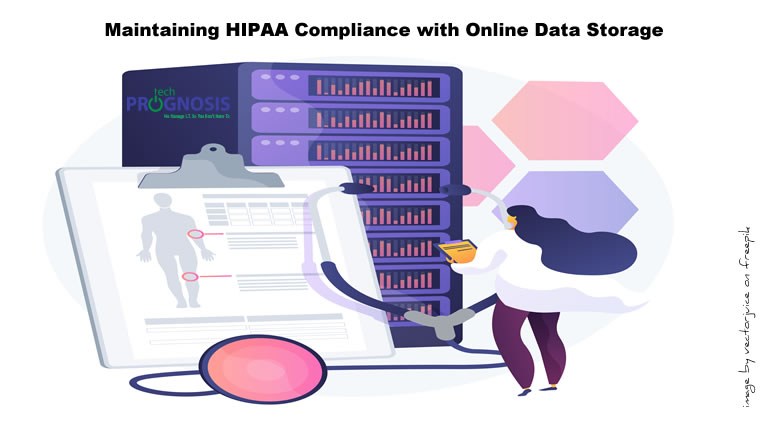
Image concept of HIPAA compliance challenges presented by cloud storage solutions with abstract illustration of predictive analytics, electronic health records etc.

Maintaining HIPAA Compliance with Online Data Storage

Healthcare organizations today face the dual challenge of leveraging online data storage solutions while ensuring compliance with the Health Insurance Portability and Accountability Act (HIPAA). This article explores the importance of maintaining HIPAA compliance with online data storage, highlights common challenges, offers best practices, and recommends popular tools to help your organization navigate this complex landscape.

What is HIPAA?

The Health Insurance Portability and Accountability Act (HIPAA) is a United States law enacted in 1996 to protect patients’ sensitive health information from being disclosed without their consent or knowledge. HIPAA sets national standards for electronic health care transactions and national identifiers for providers, health insurance plans, and employers.

Read more

Share

Protecting Patient Data: A Comprehensive Guide to Mitigating Healthcare Security Risks

Image of healthcare showing abstract concept illustration of protecting patient data with a practitioner-pharmacists using secure access to medical records.

In a rapidly evolving healthcare landscape, the digital transformation of patient data and record systems has become essential for improving patient care and operational efficiency. However, with these technological advancements come a range of security risks that must be diligently addressed.

In this blog article, we will explore the potential threats and risks associated with healthcare patient data security and propose mitigation strategies. We will also consider these in the context of the Health Insurance Portability and Accountability Act (HIPAA), which sets stringent standards for safeguarding patient information.

Read more

Share
Share
Share