IT Governance: Key Focus Areas and Best Practices for Businesses

Isometric IT Governance concept with magnifier, graphs, clock, coins, tablet computer, laptop, business presentation, negotiations, and conference meeting illustration.

Understanding IT Governance: Key Focus Areas and Best Practices for Businesses

In today’s digital age, information technology (IT) is a critical component of business success. However, managing and aligning IT with business goals can be a complex task. This is where IT governance comes into play. IT governance ensures that IT resources and systems support business objectives, manage risks effectively, and deliver value. In this article, we will explore the key focus areas of IT governance and provide practical examples and best practices for businesses.

What is IT Governance?

IT governance is a framework that ensures IT investments support business goals, manage risks, and deliver value. It involves a set of processes, policies, and structures that help organizations manage and control their IT operations. Effective IT governance aligns IT strategy with business strategy, optimizes resources, and ensures compliance with regulations.

Read more

Share

HIPAA Compliance with Online Data Storage

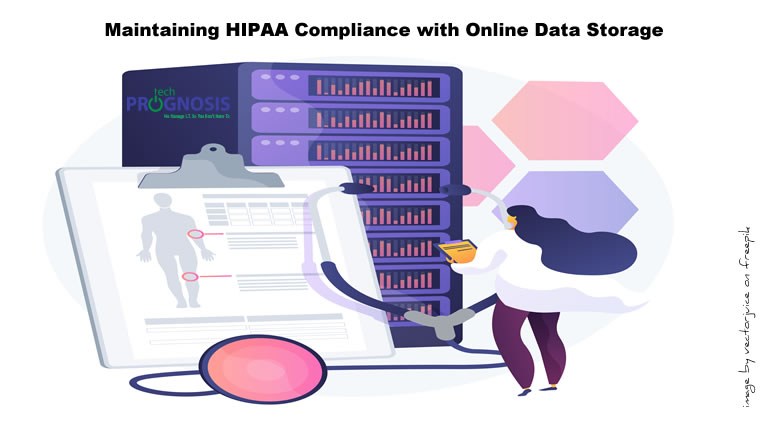
Image concept of HIPAA compliance challenges presented by cloud storage solutions with abstract illustration of predictive analytics, electronic health records etc.

Maintaining HIPAA Compliance with Online Data Storage

Healthcare organizations today face the dual challenge of leveraging online data storage solutions while ensuring compliance with the Health Insurance Portability and Accountability Act (HIPAA). This article explores the importance of maintaining HIPAA compliance with online data storage, highlights common challenges, offers best practices, and recommends popular tools to help your organization navigate this complex landscape.

What is HIPAA?

The Health Insurance Portability and Accountability Act (HIPAA) is a United States law enacted in 1996 to protect patients’ sensitive health information from being disclosed without their consent or knowledge. HIPAA sets national standards for electronic health care transactions and national identifiers for providers, health insurance plans, and employers.

Read more

Share

Navigating Compliance and Ethics: A Guide for Every Business

Image concept of compliance and ethics, law, legal regulation with document scales, gavel, seal stamp and pencil.

In today’s complex business landscape, two crucial pillars seem to increasingly stand tall: compliance and ethics. These elements serve as the moral compass and regulatory framework guiding organizations toward responsible and sustainable practices. Whether you’re a seasoned professional or a budding entrepreneur, understanding the nuances of compliance and ethics is crucial for fostering a culture of trust, transparency, and responsibility within your workplace.

In this comprehensive guide, we delve into everything you need to know about compliance and ethics, from key concepts to practical examples, illuminating their significance and how they intertwine to shape the corporate world.

Read more

Share

Cybersecurity Insurance Compliance: The Crucial Role of Multi-Factor Authentication and Vulnerability Management

Image of cybersecurity insurance horizontal banner showing secure computer devices.

In today’s digitally driven world, the importance of cybersecurity for businesses cannot be overstated. With cyber threats evolving at an alarming rate, safeguarding sensitive data and digital assets has become paramount. As businesses increasingly rely on technology to operate, cyber insurance has emerged as a vital component of risk management strategies. However, obtaining cybersecurity insurance isn’t just about checking a box; it requires proactive measures to mitigate risks and demonstrate a commitment to cybersecurity best practices.

In this article, we’ll delve into two key pillars of cybersecurity that not only fortify your defenses against cyber threats but also align with the requirements of cybersecurity insurance: multi-factor authentication (MFA) and vulnerability management.

Read more

Share

Shared Responsibility and The Importance of Email Backup for Microsoft Office 365

Image showing the concept of the shared responsibility model for Microsoft 365 Office, and depicting the responsibility of Microsoft and that of the consumers of its cloud services.

Protecting Your Business Data: The Importance of Shared Responsibility and Third-Party Email Backup Solutions for Microsoft Office 365

Businesses rely heavily on cloud-based solutions like Microsoft Office 365 for their day-to-day operations. With its suite of productivity tools and collaborative features, Office 365 has become a cornerstone for many organizations, enabling seamless communication, document sharing, and project management. However, amidst the convenience and efficiency it offers, there lies a critical aspect that business owners often overlook: shared responsibility for data protection.

Understanding Shared Responsibility

When it comes to cloud services like Office 365, there’s a common misconception that data protection is solely the responsibility of the service provider. While Microsoft does implement robust security measures to safeguard your data against external threats, such as encryption, threat detection, and compliance certifications, the responsibility for certain aspects of data protection falls on the shoulders of the user – that’s you, the business owner.

Read more

Share

Building a Sustainable GRC Program: A Comprehensive Guide for Every Business

Image of a set of platforms with small characters of coworkers with puzzle pieces and graph elements representing the components of a sustainable GRC program.

A well-designed GRC program not only ensures regulatory compliance but also helps organizations proactively manage risks and enhance overall performance.

Introduction to Building a Sustainable GRC Program

Organizations are constantly faced with the challenge of managing risks, ensuring compliance, and maintaining effective governance. To navigate this complex terrain, it’s crucial to implement a robust Governance, Risk, and Compliance (GRC) program. A well-designed GRC program not only ensures regulatory compliance but also helps organizations proactively manage risks and enhance overall performance.

In this article, we’ll guide you through the process of creating a sustainable GRC program with actionable examples, breaking down the complexities into easily understandable steps.

Read more

Share
Share
Share