

NBA Fines And Non-Compliance Lessons for SMBs

Image of an arrangement with money, gavel, calculator, and contract illustrating the consequences of non-compliance with laws, rules, and regulations.

NBA Fines And Non-Compliance Lessons for SMBs

Regulations on the local, state, and federal levels are on the rise and this is putting a lot of pressure on compliance efforts of Small and Medium-sized businesses (SMBs) and exposing the fact that these organizations can only avoid costly fines and/or lawsuits for non-compliance by maintaining strict compliance throughout their information management processes.

I found the fines levied by the National Basketball Association (NBA) on players including the likes of the late Los Angeles Lakers Great, Kobe Bryant, and Mark Cuban, the owner of the Dallas Mavericks basketball team, among others, as a good lesson on the cost of non-compliance.

The NBA has consistently fined players who were in non-compliance of its rules and these violations range from the serious to what one could argue is the absurd – like kicking a ball in frustration or throwing a basketball into the stands in celebration of a win.

Read more

Share

Navigating White-Collar Crimes: Unveiling the Lack of Recognition Theory

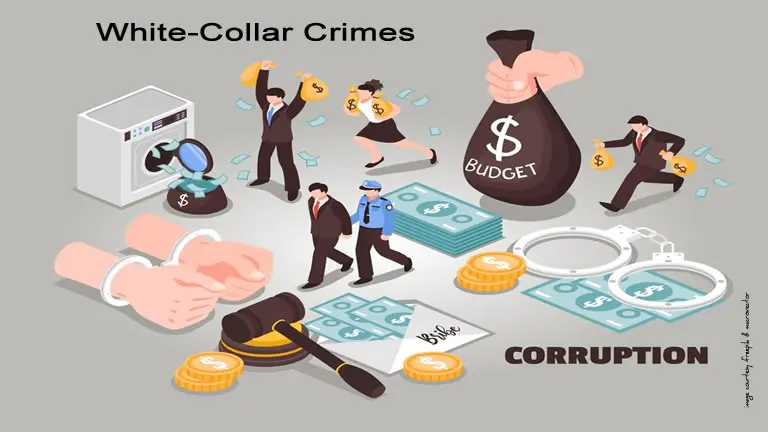
Image of handcuffs, a gavel and icons symbolizing money laundering, bribery, embezzlement, and the words "White-Collar Crimes" and "Corruption" written on a gray background.

Decoding White-Collar Crimes: Unveiling the Lack of Recognition Theory Through Real-Life Scenarios

In the complex world of corporate conduct, the “Lack of Recognition” theory stands out as a compelling force behind unintentional white-collar crimes. This theory not only encompasses employees feeling undervalued but also sheds light on situations where individuals inadvertently breach laws, rules, or regulations.

To explore this concept, consider the following white-collar crime definition:

What Are White-Collar Crimes?

White collar crimes refer to non-violent crimes committed through deceptive practices, for the purpose of financial gain. Typically, white-collar crimes are committed by business people who are able to access large amounts of money, though the term is sometimes applied to others who pilfer monies in other circumstances. White collar crimes are non-violent, and are committed by a broad range of activities, such as insider trading.

In this blog post, we’ll delve into the challenges posed by the Lack of Recognition theory, exploring strategies that compliance officers can deploy to mitigate white-collar crime with the help of real-life examples and case studies to bring these concepts to life.

Read more

Share

Navigating Compliance Risks: A Comprehensive Guide

Image of document binders, documents, a stamp, paper clips, a laptop, and the words manage regulatory compliance risks with regular assessments.

Navigating Compliance Risks

In today’s business landscape, where rules and regulations are constantly evolving, organizations face a multitude of legal and regulatory compliance risks. Ensuring that your organization adheres to these standards is not just a good practice; it’s often a legal requirement. Failure to do so can result in hefty fines, damage to your reputation, and even legal action. To help you navigate this complex terrain, we’ve put together a comprehensive guide for conducting a compliance-related risk assessment.

1. Purpose and Scope: Defining Your Mission

Start by defining the purpose and scope of your compliance risk assessment. What do you aim to achieve, and what are the boundaries? Your mission might be to identify potential legal or regulatory issues that could impact your organization’s operations, reputation, or financial health. The scope should include a clear definition of the laws, regulations, and standards relevant to your industry and geographic locations.

Example: Suppose you run a healthcare facility in California. Your purpose is to identify risks associated with data privacy regulations (like HIPAA) and to ensure compliance with California’s specific healthcare laws.

Read more

Share

Enhancing Cybersecurity: Implementing NIST Cybersecurity Framework (CSF) with COBIT 2019

Collaboration concept with human characters and artificial intelligence elements, simulating the NIST Cybersecuriy Framework (CSF) and the Control Objectives for Information and Related Technologies (COBIT) 2019 framework working together.

Today’s digital landscape is rapidly evolving and organizations face an ever-increasing threat of cyberattacks as a quick scan of news headlines about breaches and data leaks, including the recent cybersecurity attack on MGM shows. To address this challenge, it is crucial for businesses to adopt comprehensive cybersecurity frameworks. Two such frameworks that can work harmoniously to fortify your organization’s cybersecurity posture are the National Institute of Standards and Technology’s Cybersecurity Framework (NIST CSF) and the Control Objectives for Information and Related Technologies (COBIT 2019).

In this article, we will explore how an organization can effectively implement the NIST CSF using COBIT 2019, promoting security, compliance, and resilience.

Understanding the NIST Cybersecurity Framework (CSF)

The NIST CSF, developed by the National Institute of Standards and Technology, is a widely accepted cybersecurity framework that offers a structured approach to managing and reducing cybersecurity risk. It is built on five core functions: Identify, Protect, Detect, Respond, and Recover. These functions provide a holistic view of cybersecurity management and assist organizations in identifying vulnerabilities, protecting assets, and responding to security incidents.

Read more

Share

OCTAVE Methodology for Information and Technology Governance

Image concept icons of a datacenter environment showing a folder secured with a fingerprint, a laptop with "Data Verification" written on it, and a person sitting a cubicle with a golden key on the floor.

Introduction

In today’s digital age, information and technology governance are crucial for the success and security of any business, regardless of its size. Small businesses, in particular, often face unique challenges when it comes to managing their IT resources and safeguarding their sensitive data. One effective approach to address these challenges is the OCTAVE (Operationally Critical Threat, Asset, and Vulnerability Evaluation) methodology. In this article, we will explore how small businesses can leverage the OCTAVE methodology to enhance their information and technology governance.

What is OCTAVE?

The OCTAVE methodology is a comprehensive framework developed by the Software Engineering Institute (SEI) at Carnegie Mellon University. It is designed to help organizations identify and manage information security risks effectively. OCTAVE takes a systematic and risk-based approach, focusing on both technical and non-technical aspects of information and technology governance.

Read more

Share

NIST Cybersecurity Framework (CSF) is a Crucial Tool for Cybersecurity

Image showing business data analytics, platform charts and diagram with text of the five functions of the NIST Cybersecurity Framework: Identify, Protect, Detect, Respond and Recover.

Understanding the NIST Cybersecurity Framework (CSF)

The NIST Cybersecurity Framework (CSF) is a crucial tool in today’s cybersecurity environment, providing organizations with a structured and flexible approach to managing and improving their cybersecurity efforts. It was developed by the National Institute of Standards and Technology (NIST) in response to the increasing cyber threats that organizations face, and to help them navigate these challenges.

In this article, we will discuss why the NIST CSF matters, delve into its implementation tiers, and provide guidance on how organizations can use this framework to protect their infrastructure.

Read more

Share
Share
Share