When Your Cloud Security Falls Short: A Practical Guide to Compensating Security Controls for Texas Businesses
How Round Rock and Austin-Area Companies Can Bridge Security Gaps with Compensating Security Controls Without Breaking the Budget
If you’re running a business in Round Rock, Austin, or anywhere in Central Texas’s booming tech corridor, you’re likely using cloud services for at least part of your operations. Maybe you’re a healthcare provider in Cedar Park storing patient records, a financial services firm in Georgetown processing transactions, or a tech startup in Pflugerville building the next big thing.
Here’s something that might keep you up at night: what happens when your cloud provider’s security features don’t quite meet your industry’s requirements?
Let me share a story about “Adam,” a security analyst at a Austin-area financial services company, whose experience might sound familiar to many of you.
Protecting Your Austin Business: A Deep Dive into Access Control and the NIST Cybersecurity Framework
If you’ve ever used a key card to enter your office building or typed a password into your laptop, you’ve experienced access control in action. But behind these everyday interactions lies a sophisticated security discipline that can make or break your organization’s cybersecurity posture—especially here in Austin, where our thriving tech scene and diverse business landscape make us an attractive target for cybercriminals.
As someone who’s spent years helping Texas businesses strengthen their security foundations, I’ve seen firsthand how proper access control can prevent devastating breaches, while poor implementation can lead to catastrophic consequences. Today, let’s explore access control through the lens of the NIST Cybersecurity Framework (CSF) and discuss how Austin organizations can protect their most valuable assets.
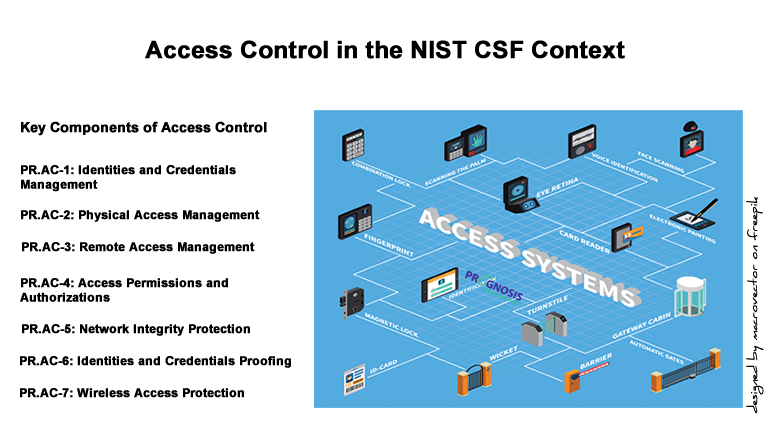
Specifically, access control is addressed in the Access Control (PR.AC) category of the Protect function. The NIST CSF defines this as managing access to assets and associated facilities to ensure that only authorized users, processes, or devices can access them—and only in a manner appropriate to their authorization level.
Think of access control as the digital and physical gatekeeper of your organization. It’s the system of policies, procedures, and technologies that determines who can enter your premises, what data they can view, which systems they can use, and what actions they can perform.
In Austin’s competitive business environment, where companies from healthcare startups to financial services firms handle sensitive information daily, robust access control isn’t just good practice—it’s essential for survival.
The NIST Cybersecurity Framework Protect Function: A Practical Guide for Small Businesses in Austin, Texas
Cybersecurity often feels overwhelming for small businesses. With headlines about major breaches and new regulations, it’s easy to think that strong cybersecurity is something only large corporations can afford. But the truth is, businesses of every size—whether you’re running a coffee shop in East Austin, a dental clinic in South Lamar, or a boutique retail store downtown—have critical systems, data, and people to protect.
That’s where the Protect Function of the NIST Cybersecurity Framework (CSF) comes in. While the framework sounds technical, it’s essentially a guide to help organizations reduce risk by protecting what matters most. In this article, we’ll break down the Protect Function in simple terms, explore how Austin businesses can apply it, and highlight practical steps you can take today.
What Is the Protect Function?
The NIST CSF has five core functions: Identify, Protect, Detect, Respond, and Recover. The Protect function focuses on proactive measures—safeguarding your people, assets, systems, and data before something goes wrong.
Think of it as putting locks on your doors, training your staff, and installing smoke detectors before there’s a fire. Protection doesn’t eliminate all risks, but it makes you less vulnerable and better prepared.