Access Control and the NIST Cybersecurity Framework

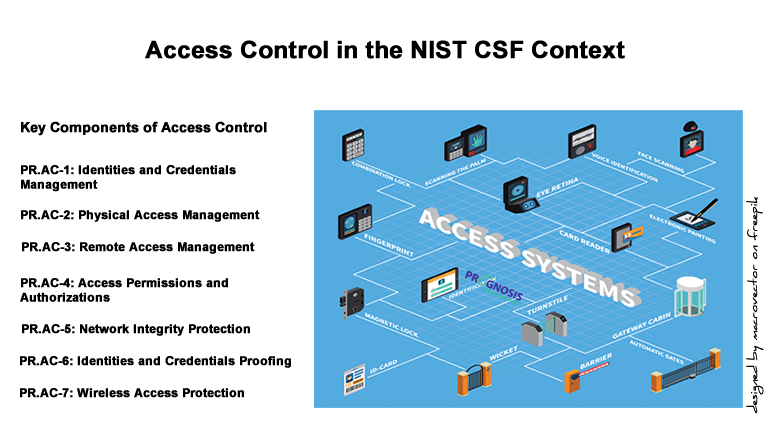
Access control systems isometric flowchart showing security systems using biometric verification, face and voice recognition, accessibility lock, security barriers etc.

Protecting Your Austin Business: A Deep Dive into Access Control and the NIST Cybersecurity Framework

If you’ve ever used a key card to enter your office building or typed a password into your laptop, you’ve experienced access control in action. But behind these everyday interactions lies a sophisticated security discipline that can make or break your organization’s cybersecurity posture—especially here in Austin, where our thriving tech scene and diverse business landscape make us an attractive target for cybercriminals.

As someone who’s spent years helping Texas businesses strengthen their security foundations, I’ve seen firsthand how proper access control can prevent devastating breaches, while poor implementation can lead to catastrophic consequences. Today, let’s explore access control through the lens of the NIST Cybersecurity Framework (CSF) and discuss how Austin organizations can protect their most valuable assets.

What is Access Control in the NIST CSF Context?

The National Institute of Standards and Technology (NIST) Cybersecurity Framework organizes cybersecurity activities into five core functions: Identify, Protect, Detect, Respond, and Recover. Access control falls squarely within the Protect Function, which focuses on developing and implementing appropriate safeguards to ensure delivery of critical services.

Specifically, access control is addressed in the Access Control (PR.AC) category of the Protect function. The NIST CSF defines this as managing access to assets and associated facilities to ensure that only authorized users, processes, or devices can access them—and only in a manner appropriate to their authorization level.

Think of access control as the digital and physical gatekeeper of your organization. It’s the system of policies, procedures, and technologies that determines who can enter your premises, what data they can view, which systems they can use, and what actions they can perform.

In Austin’s competitive business environment, where companies from healthcare startups to financial services firms handle sensitive information daily, robust access control isn’t just good practice—it’s essential for survival.

Read more

Share

Protect Function of the NIST Cybersecurity Framework: A Practical Guide

Infographic concept with a six-point point list of what the Protect function of the NIST Cybersecurity Framework covers like access control, awareness training, data security.

The NIST Cybersecurity Framework Protect Function: A Practical Guide for Small Businesses in Austin, Texas

Cybersecurity often feels overwhelming for small businesses. With headlines about major breaches and new regulations, it’s easy to think that strong cybersecurity is something only large corporations can afford. But the truth is, businesses of every size—whether you’re running a coffee shop in East Austin, a dental clinic in South Lamar, or a boutique retail store downtown—have critical systems, data, and people to protect.

That’s where the Protect Function of the NIST Cybersecurity Framework (CSF) comes in. While the framework sounds technical, it’s essentially a guide to help organizations reduce risk by protecting what matters most. In this article, we’ll break down the Protect Function in simple terms, explore how Austin businesses can apply it, and highlight practical steps you can take today.


What Is the Protect Function?

The NIST CSF has five core functions: Identify, Protect, Detect, Respond, and Recover. The Protect function focuses on proactive measures—safeguarding your people, assets, systems, and data before something goes wrong.

Think of it as putting locks on your doors, training your staff, and installing smoke detectors before there’s a fire. Protection doesn’t eliminate all risks, but it makes you less vulnerable and better prepared.

Read more

Share

Securing Remote Access: Best Practices, Risks, and Tools for Organizations

Gradient illustration showing a shield and the text "Securing Remote Access" with technology icons and gears in the background.

Securing Remote Access: Balancing Convenience and Security in the Modern Workplace

Remote access has become a necessity for modern businesses, enabling employees, contractors, and third-party vendors to connect to corporate networks from anywhere in the world. However, while remote access enhances productivity and flexibility, it also introduces security risks that can compromise sensitive data and critical infrastructure.

In this article, we’ll explore the concept of remote access security, examine real-world sector-specific examples, assess the benefits and risks, highlight common challenges organizations face, and offer best practices for securing remote access. Additionally, we’ll recommend popular modern tools, outlining their strengths and weaknesses, to help organizations make informed decisions.

Read more

Share

Zero Trust: A Modern Approach to Cybersecurity with NIST SP 800-207

Data protection framework on a laptop simulating the zero trust assumption that threats can exist both inside and outside the network, and continuously verifying the identity and integrity of every user and device trying to access resources.

Cybersecurity is a top priority for organizations across all sectors. As cyber threats evolve, traditional security models are becoming less effective, prompting the need for more robust frameworks. One such framework is Zero Trust or ZT, which fundamentally shifts how organizations approach security. NIST SP 800-207 provides a comprehensive guide to implementing ZT.

This article will explore what Zero Trust is, delve into NIST SP 800-207, provide examples from various sectors, examine common challenges, and offer best practices for implementation.

Read more

Share

Preset Security Policies: Keeping Your Organization Safe and Sound

Isometric image showing simulated preset security polices for access control, data protection, network security, anti-phishing and incident response. Businesspeople shake hands at device screens with document 3d vector.

Preset Security Policies: Keeping Your Organization Safe and Sound

In the fast-paced technology world we now live in, the security of our data and systems has become paramount. Every sector, from healthcare to finance to education, faces unique security challenges. One effective way to manage these challenges is through preset security policies. These policies provide a framework to help organizations maintain a secure posture and protect their critical assets.

In this article, we will walk you through the importance of preset security policies, provide sector-specific examples, highlight common challenges, and offer best practices. We’ll also recommend some popular tools for policy management to help you get started. Let’s dive in!

Read more

Share

Addressing Significant Gaps in an Organization’s IAM Framework

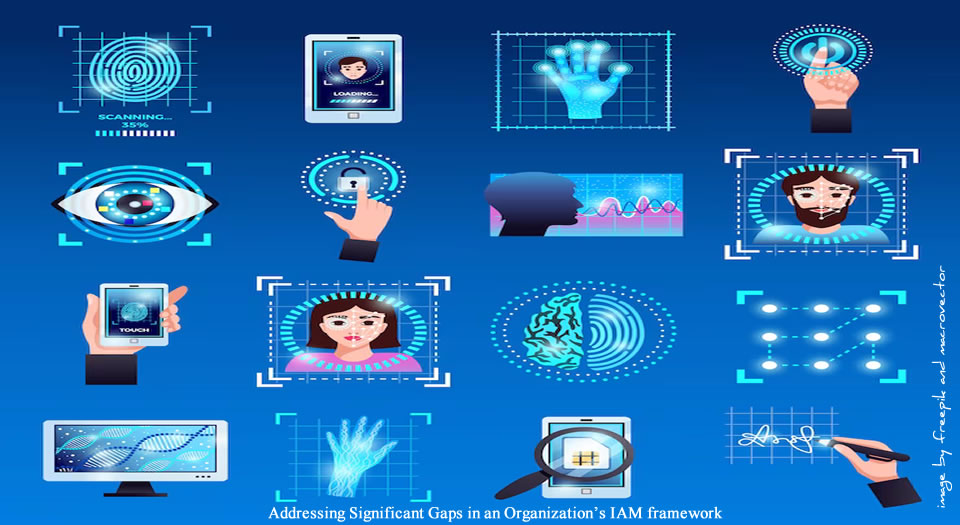
Image of identification technologies symbols and touch screen fingerprint recognition ID system.

A recent risk assessment of an organization’s IT environment revealed significant gaps in the current IAM framework, including ineffective access control policies, weak authentication mechanisms, and insufficient monitoring and auditing procedures.

This could as well be your organization, and here, we suggest recommendations to address these issues.

What is an Identity and Access Management or IAM Framework?

An Identity and Access Management framework is the combination of two information security controls: identity management and access management.

Identity management is the method used to classify a user, group or device on a network with the goal of placing identified resources into categories so that network and security policies can be applied. For example, it checks checks a login attempt against an identity management database.

Access management on the other hand refers to the way an organization determines who or what on a network has the right to connect to a particular resource as determined by factors like job title, tenure, security clearance, and project etc.

Read more

Share
Share
Share