Generative AI in Risk and Compliance

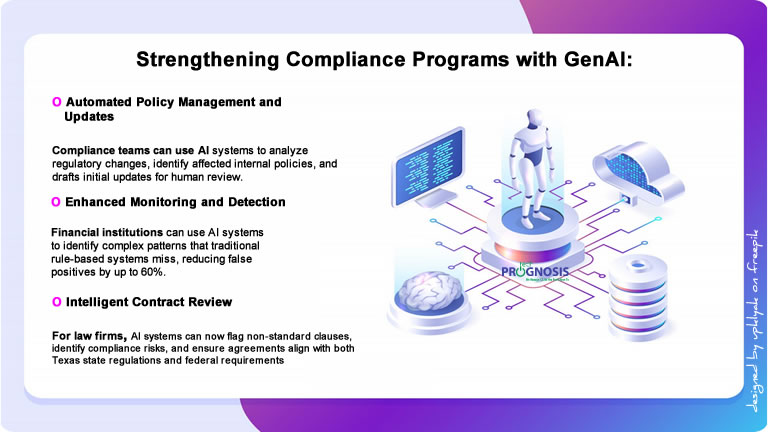
Generative AI concept showing humanoid with neural network, code on a computer monitor, and cloud computing icon.

Generative AI in Risk and Compliance: How Texas Enterprises Are Navigating the New Frontier

The Generative AI revolution isn’t coming—it’s already transforming conference rooms from Round Rock to Richardson, and boardrooms from Austin to Arlington.

When Dell Technologies’ compliance team in Round Rock began experimenting with generative AI tools in early 2023, they discovered something remarkable: what started as a productivity enhancement quickly evolved into a fundamental reshaping of their entire risk landscape. This transformation isn’t unique to Dell—it’s happening across Texas enterprises, from Samsung’s semiconductor facilities in Austin to the financial institutions lining Dallas’s Main Street.

As someone who’s spent years helping organizations navigate the complex waters of governance, risk, and compliance (GRC), I’ve witnessed firsthand how generative AI is simultaneously creating unprecedented opportunities and introducing risks that keep chief compliance officers awake at night.

Let’s explore how this technology is reshaping enterprise risk profiles and where it can genuinely deliver value for your organization.

Read more

Share

Risk Authorization Decisions in the NIST Risk Management Framework

Cybersecurity risk authorization decisions isometric concept showing businessmen shaking hands, a huge tablet with signatures, a secure padlock, and blockchain technology.

Why Your Business Can’t Afford to Ignore Cybersecurity Risk Authorization Decisions: A Round Rock Business Leader’s Guide to the NIST Risk Management Framework

How Central Texas organizations can protect sensitive data and avoid million-dollar mistakes through proper security risk authorization decisions


If your Round Rock, Austin, or Cedar Park business handles sensitive financial data, healthcare records, or customer information, there’s a critical decision-making process that could make or break your organization’s future. It’s called the cyber risk authorization decision within the NIST Risk Management Framework (RMF), and understanding it could save your company from devastating breaches, regulatory fines, and reputational damage.

Let me share a story that illustrates why this matters to every business leader from Georgetown to San Marcos.

Read more

Share

Risk Assessment Program: Real-World Scenarios & Smart Strategies

Simulation of people reviewing a risk assessment program showing a checklist dashboard on a laptop.

Why Round Rock Businesses Can’t Afford to Skip a Risk Assessment Program: Real-World Scenarios & Smart Strategies

Learn how Round Rock, Texas businesses can manage cybersecurity and operational risks using practical, real-world examples. Understand PII breaches, DDoS attacks, and software update failures — and how to build a proactive risk management program or plan under the NIST RMF.

Estimated Reading Time: 10 minutes (≈1,950 words)


Introduction

Round Rock and its neighboring communities — Georgetown, Cedar Park, Pflugerville, Hutto, and Taylor — are thriving tech hubs. With that growth comes a new level of responsibility: keeping data safe, systems reliable, and operations compliant.

As a Governance, Risk, and Compliance (GRC) specialist, I’ve seen how even small and mid-sized companies can suffer serious setbacks when they don’t treat risk assessment as a business priority. This post breaks down how to identify, categorize, and document risks — using three realistic examples your business might face.

Read more

Share

Cloud Security Threats and Mitigation: A Guide for Financial Services in Austin, Texas

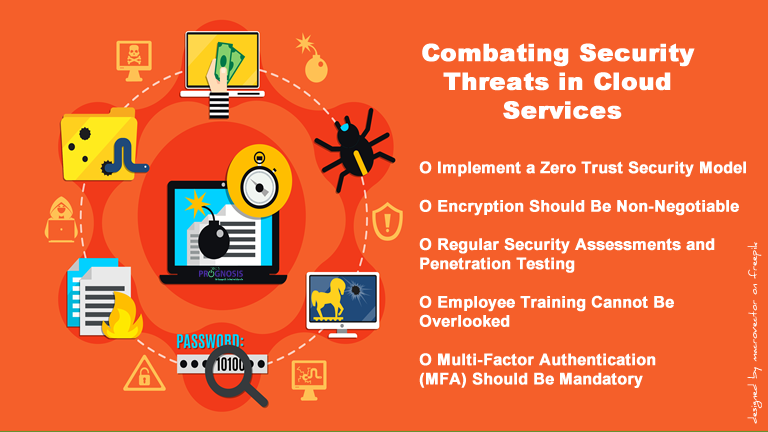
Cloud security threats that target financial services in Austin, Texas like spam threats, hackers, fraud, password thefts, and mitigation solutions like email security, firewalls, data security

Combating Cloud Security Threats in Cloud Computing: A Guide to Cloud Security for Austin’s Financial Services

As someone who’s spent over a decade helping financial institutions navigate the complex world of cybersecurity, I’ve watched Austin’s financial services sector transform dramatically. From the bustling tech corridors along MoPac to the financial districts downtown, our city’s banks, credit unions, and fintech startups are increasingly moving their operations to the cloud. But with this shift comes the critical questions I hear almost daily:  “How do we combat security threats in cloud computing”, and “How do we keep our customers’ financial data safe in the cloud?”

Let me share what I’ve learned about security threats in our industry, drawing from real experiences right here in Central Texas, particularly as artificial intelligence reshapes how we think about data protection and financial services.

Read more

Share

Information Technology (IT) Risk Analysis: Policy Reviews and Risk Reports Protect Your Organization

Business information technology or IT risk analysis concept isometric vector illustration process working with database on data center system for diagrams of management statistics and operational reports.

Understanding Information Technology Risk Analysis: How Policy Reviews and Risk Reports Protect Your Organization

Organizations face an ever-growing array of cybersecurity threats. From ransomware attacks that can cripple operations to data breaches that expose sensitive customer information, the stakes have never been higher. This reality makes information technology risk analysis not just a technical necessity but a fundamental business practice that can determine an organization’s survival and success.

Risk analysis in IT involves systematically identifying, evaluating, and prioritizing potential threats to an organization’s information assets. At its core, this process helps organizations understand what could go wrong, how likely these scenarios are, and what impact they might have on business operations. One of the most effective approaches to conducting this analysis involves reviewing information security policy documents against established industry standards and regulatory requirements, then translating findings into clear, actionable risk reports.

Read more

Share
Share
Share