Organizational Documentation in Information Security Auditing

Image concept of organizational documentation in information security auding showing a stack of documents, filing cabinets, document binders, file folders, printer, and a search icon over a documents.

The Ultimate Guide to Organizational Documentation in Information Security Auditing for Small and Medium-Sized Businesses

In this digital age, information security is paramount for businesses of all sizes, and one of the key components of a strong information security framework is thorough and well-maintained organizational documentation. For small and medium-sized businesses (SMBs), maintaining the integrity, confidentiality, and availability of information is crucial for building trust with clients and partners., and ensuring that organizational documentation is thorough and up-to-date can be a daunting task. However, it’s an essential part of information security auditing that protects your business from cyber threats and regulatory penalties.

In this comprehensive guide, we’ll explore what organizational documentation entails, why it’s crucial for information security audits, and offer best practices tailored to SMBs. By the end of this article, you’ll have a clear understanding of how to improve your documentation process to safeguard your business effectively.

Read more

Share

HIPAA Compliance with Online Data Storage

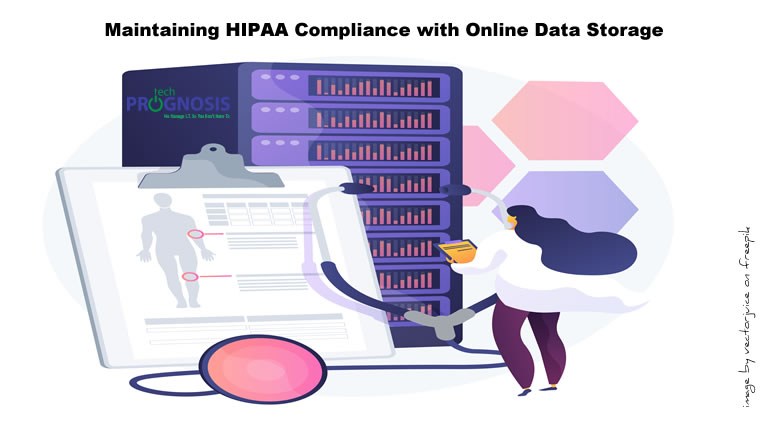
Image concept of HIPAA compliance challenges presented by cloud storage solutions with abstract illustration of predictive analytics, electronic health records etc.

Maintaining HIPAA Compliance with Online Data Storage

Healthcare organizations today face the dual challenge of leveraging online data storage solutions while ensuring compliance with the Health Insurance Portability and Accountability Act (HIPAA). This article explores the importance of maintaining HIPAA compliance with online data storage, highlights common challenges, offers best practices, and recommends popular tools to help your organization navigate this complex landscape.

What is HIPAA?

The Health Insurance Portability and Accountability Act (HIPAA) is a United States law enacted in 1996 to protect patients’ sensitive health information from being disclosed without their consent or knowledge. HIPAA sets national standards for electronic health care transactions and national identifiers for providers, health insurance plans, and employers.

Read more

Share

Protecting Patient Data: A Comprehensive Guide to Mitigating Healthcare Security Risks

Image of healthcare showing abstract concept illustration of protecting patient data with a practitioner-pharmacists using secure access to medical records.

In a rapidly evolving healthcare landscape, the digital transformation of patient data and record systems has become essential for improving patient care and operational efficiency. However, with these technological advancements come a range of security risks that must be diligently addressed.

In this blog article, we will explore the potential threats and risks associated with healthcare patient data security and propose mitigation strategies. We will also consider these in the context of the Health Insurance Portability and Accountability Act (HIPAA), which sets stringent standards for safeguarding patient information.

Read more

Share

Risk-Based Auditing: A Comprehensive Guide for Small and Medium-Sized Businesses

Auditor concept illustration of man with a laptop discussing a risk-based auditing scenario with a woman in pink and gray outfit.

The Comprehensive Guide to Risk-Based Auditing for Small and Medium-Sized Businesses

Small and medium-sized businesses (SMBs) face a multitude of risks. Whether it’s financial, operational, or compliance-related, understanding and managing these risks is crucial for sustainable growth. This is where risk-based auditing comes into play. Unlike traditional audits that focus on historical financial data, risk-based audits prioritize areas with the highest potential risks, providing a more strategic and forward-looking approach.

Risk-based auditing is a powerful approach to ensure your business operations are running smoothly, efficiently, and securely. Whether you’re a small or medium-sized business owner, understanding and implementing risk-based auditing can help you manage potential threats proactively and make informed decisions to foster growth.

This guide will demystify risk-based auditing, provide practical business-specific examples, and offer best practices to help you get started.

Read more

Share

Attack Surface Management: Essential Strategies for Cybersecurity

Image of computer security banner. Simulation of cybersecurity attack surface management with isometric illustration of laptop and icons of padlock, cloud and shield.

Understanding Attack Surface Management: Protecting Your Organization from Cyber Threats

In the modern digital landscape, cybersecurity is a top priority for organizations of all sizes. Attack surface management (ASM) has emerged as a crucial component of an effective cybersecurity strategy. Understanding and managing your attack surface can significantly reduce the risk of cyberattacks. This comprehensive guide will walk you through the concepts of threat models, hardening guides, and monitoring, with examples to illustrate these concepts. We will also discuss common challenges organizations face and offer best practices to help you bolster your cybersecurity defenses. Additionally, we will recommend some popular tools to aid in your ASM efforts.

Keywords: Attack Surface Management, Threat Models, Hardening Guides, Cybersecurity, Monitoring, Best Practices, Security Tools

Read more

Share

PCI DSS 4.0: Strategies for Addressing Requirements


Security icons set showing strategies for addressing PCI DSS 4.0 requirements like Internet security, online payments protection, bank account protection, and data encryption.

A Comprehensive Guide to Addressing PCI DSS 4.0 Requirements: Strategies and Best Practices for Small and Medium-Sized Businesses

As digital transactions continue to rise, ensuring the security of cardholder data has never been more critical. For businesses handling payment card information, compliance with the Payment Card Industry Data Security Standard (PCI DSS) is not just a legal necessity but a key component of maintaining customer trust and operational integrity. The latest version, PCI DSS 4.0, introduces new requirements and enhancements designed to bolster payment security.

This guide explores practical strategies and best practices for small and medium-sized businesses (SMBs) to navigate these requirements effectively.

Read more

Share
Share
Share