True Cost of Neglecting IT (Information Technology) and Support

Illustration of essential IT investments concept with technology symbols and text of collaboration and communication, cloud computing and storage, cybersecurity, and secure remote work solutions as a remedy for organizations and businesses neglecting IT (Information Technology) and Support

Neglecting IT (Information Technology) and Support : The Make-Or-Break Factor Business Owners Overlook—Until It’s Too Late

A CIO’s Perspective on IT as a Growth Driver, Not Just a Cost

As the vCIO of a couple of businesses and organizations, I have seen firsthand how technology can be either a strategic enabler or a major roadblock. Too often, business owners focus on growth, sales, and customer experience while leaving IT decisions on the back burner—until something goes wrong.

For many business owners, IT is seen as a necessary expense rather than a strategic asset. But the reality is that your technology infrastructure directly impacts efficiency, security, and growth. Slow computer systems, dropped phone calls impacting sales, outdated software, or weak cybersecurity measures that leave an organization’s data vulnerable don’t just cause occasional frustration—they can create significant vulnerabilities that cost your business time, money, and reputation.

Here’s the hard truth: neglecting IT and support can cost your business more than you think—in lost productivity, security risks, and missed opportunities. The right technology isn’t just an operational necessity; it is a competitive advantage.

So, let me ask you: Is your IT helping your business grow, or is it quietly holding you back?

Read more

Share

PCI Compliance Questionnaires: A Deep Dive

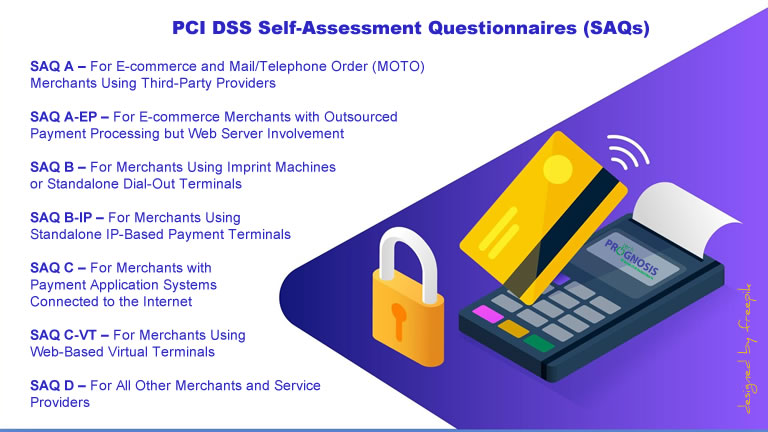
Credit card security isometric illustration showing a padlock, a credit card and a Point-of-Sale card reader, with text of types of PCI compliance questionnaires

A Deep Dive into PCI Compliance Questionnaires: Understanding the Differences and Overcoming Challenges

Payment security is critical in today’s digital economy, and the Payment Card Industry Data Security Standard (PCI DSS) plays a vital role in protecting payment card data from breaches and fraud. However, achieving PCI compliance can feel overwhelming, especially when organizations must determine the correct Self-Assessment Questionnaire (SAQ) or PCI compliance questionnaires to complete.

This article will provide a detailed breakdown of the different PCI DSS SAQs, the challenges businesses face in completing them, and best practices to streamline compliance. We’ll also explore risk appetite statements, clarify the roles of Qualified Security Assessors (QSAs) and Approved Scanning Vendors (ASVs), and conclude with a call to action for expert PCI compliance guidance.

Read more

Share

Risks and Privacy Management in Microsoft Office 365

Concept of digital security, privacy, listing several tools that can help manage risks and ensure privacy in Microsoft Office 365

Managing Risks and Privacy in Microsoft Office 365: A Comprehensive Guide for Every Sector

In today’s digital age, managing risks and protecting privacy in your organization’s digital workspace is more important than ever. Microsoft Office 365 (now known as Microsoft 365) is a powerful suite of tools that many businesses rely on for productivity and collaboration. However, with great power comes great responsibility—especially when it comes to security and privacy.

This guide will walk you through managing risks and privacy in Microsoft Office 365, with sector-specific examples, common challenges, and best practices.

Introduction

Microsoft Office 365 has become a cornerstone for many organizations, providing a suite of tools that enhance productivity and collaboration. However, with great power comes great responsibility. Managing risks and privacy in Office 365 is crucial to protect sensitive information and ensure compliance with industry standards. This article aims to demystify these challenges and offer actionable solutions.

Read more

Share

GRC Landscape: Navigating Governance, Risk and Compliance

Governance, Risk management, and Compliance or GRC isometric business concept with icons of server computers, people, electronic gadgets, magnifier, graphs, clock, coins, tablet computer, laptop, business presentation, negotiations, conference meeting etc.

GRC in Small and Medium-Sized Enterprises (SMEs): A Comprehensive Guide

In today’s dynamic business environment, governance, risk management, and compliance (GRC) have become essential components for small and medium-sized enterprises (SMEs). While often associated with large corporations, GRC frameworks are equally crucial for SMEs to ensure sustainable growth, mitigate risks, and maintain compliance with regulations. This guide will explore the importance of GRC in SMEs, provide practical examples, and present use cases to illustrate its application.

What is GRC?

Governance, Risk, and Compliance (GRC) is a framework that helps organizations achieve their objectives, address uncertainties, and act with integrity. Traditionally, GRC has been associated with large corporations. However, it is equally vital for Small and Medium-Sized Enterprises (SMEs) to embrace GRC to ensure sustainability and growth in an increasingly complex business environment.

These three pillars form an integrated approach to ensuring that an organization achieves its objectives, manages uncertainty, and acts with integrity.

Read more

Share

GRC Frameworks: An Introduction to Governance, Risk, and Compliance


Simulation of GRC frameworks with text of governance, risk management, and compliance frameworks like COBIT, COSO, ISO 31000, and the NIST Cybersecurity Framework (CSF).

Introduction to GRC Frameworks

In today’s dynamic and rapidly-evolving regulatory environment, organizations face myriad challenges including increasing calls for accountability, regulatory compliance, risk management, and governance oversight. These challenges necessitate a robust framework to ensure that all aspects of Governance, Risk, and Compliance (GRC) are adequately addressed. GRC frameworks provide a structured approach to align business objectives with regulatory requirements, mitigate risks, and ensure sound governance practices.

This article delves into the core components and benefits of popular GRC frameworks, offering examples and use cases to illustrate their practical applications.

What is a GRC Framework?

A GRC framework is a comprehensive structure that integrates IT governance, risk management, and compliance processes into an organization’s daily operations. By unifying these elements, organizations can enhance their decision-making processes, improve performance, and ensure regulatory adherence.

Read more

Share

PDCA Cycle of ISO 27001: A Comprehensive Guide

Isometric image of people working simulating a workplace, statistical analysis, management meeting, and business concept as a depiction of the Plan-Do-Check-Act, or PDCA cycle of ISO 27001.

Mastering ISO 27001 with the PDCA Cycle: A Comprehensive Guide

ISO 27001 is the international standard for managing information security. At the heart of ISO 27001 is the PDCA cycle, which stands for Plan-Do-Check-Act. This cycle is a systematic process for continual improvement in information security management. It is applicable across various sectors, ensuring organizations can effectively protect their data while maintaining compliance with international standards.

In this comprehensive guide, we will explore the PDCA cycle in the context of ISO 27001, provide sector-specific examples, discuss how to create and manage the cycle, highlight common challenges, and share best practices to help you achieve success.

Whether you’re in healthcare, manufacturing, a non-profit, finance, or any other industry, this guide is designed to be your go-to resource for implementing ISO 27001 with the PDCA cycle.

Read more

Share
Share
Share