Data Lifecycle Implementation and Records Management

Infographic showing texts of the six stages of data lifecycle in data lifecycle implementation and records management

Data Lifecycle Implementation and Records Management: A Comprehensive Guide

In today’s data-driven world, effective data lifecycle management and records management are crucial for organizations of all sizes. Organizations collect and store vast amounts of information. Managing this data efficiently is crucial to ensuring that it is both useful and compliant with regulations. This is where data lifecycle implementation and records management come into play. Understanding these concepts can seem daunting, but with the right approach, any organization can implement effective strategies to manage their data.

This comprehensive guide will delve into the concepts of data lifecycle implementation, records management, retention, and remediation. We’ll also explore common challenges faced by organizations, best practices to overcome these challenges, and recommend popular tools to streamline your data management processes.

Read more

Share

IT Audit Planning Process: A Comprehensive Guide

Time management concept with planning time symbols isometric with businesspeople looking at a planning board simulating an IT audit planning process as a systematic sequence of steps.

In today’s fast-paced digital landscape, effective Information Technology (IT) audit planning is more than a checkbox exercise—it’s a strategic imperative. Whether you’re a small nonprofit, a growing manufacturing firm, or a large healthcare organization, a well-structured IT audit plan helps ensure your systems are secure, compliant, and aligned with business objectives. In this article, we’ll walk through the IT audit planning process from a Governance, Risk, and Compliance (GRC) expert’s perspective, spotlighting how it differs from risk assessment, exploring various audit types, tackling common challenges, and sharing best practices. We’ll also include a concrete, sector-specific example with timelines, and recommend popular tools to streamline your efforts.

Read more

Share

True Cost of Neglecting IT (Information Technology) and Support

Illustration of essential IT investments concept with technology symbols and text of collaboration and communication, cloud computing and storage, cybersecurity, and secure remote work solutions as a remedy for organizations and businesses neglecting IT (Information Technology) and Support

Neglecting IT (Information Technology) and Support : The Make-Or-Break Factor Business Owners Overlook—Until It’s Too Late

A CIO’s Perspective on IT as a Growth Driver, Not Just a Cost

As the vCIO of a couple of businesses and organizations, I have seen firsthand how technology can be either a strategic enabler or a major roadblock. Too often, business owners focus on growth, sales, and customer experience while leaving IT decisions on the back burner—until something goes wrong.

For many business owners, IT is seen as a necessary expense rather than a strategic asset. But the reality is that your technology infrastructure directly impacts efficiency, security, and growth. Slow computer systems, dropped phone calls impacting sales, outdated software, or weak cybersecurity measures that leave an organization’s data vulnerable don’t just cause occasional frustration—they can create significant vulnerabilities that cost your business time, money, and reputation.

Here’s the hard truth: neglecting IT and support can cost your business more than you think—in lost productivity, security risks, and missed opportunities. The right technology isn’t just an operational necessity; it is a competitive advantage.

So, let me ask you: Is your IT helping your business grow, or is it quietly holding you back?

Read more

Share

EU Standard Contractual Clauses (SCCs): A Guide to Lawful Data Transfers

Simulation of Terms of Service presentation on a mobile device showing text of the four critical articles of the EU Standard Contractual Clauses (SCCs).

Navigating EU Standard Contractual Clauses (SCCs): A Guide to Lawful Data Transfers and Staying Protected

Introduction

In an increasingly globalized world, data flows across borders are integral to business operations. Yet, as the volume of data transferred grows, so does the importance of protecting this data—especially in light of strict privacy regulations. For organizations transferring personal data outside of the European Economic Area (EEA), the EU Standard Contractual Clauses (SCCs) are a foundational mechanism to ensure compliance with data protection laws like the General Data Protection Regulation (GDPR).

In this article, we’ll explore the essentials of the EU SCCs, break down critical articles within the clauses, discuss the common compliance challenges organizations face, and offer best practices for managing data transfers securely. Additionally, we’ll recommend tools to help streamline the compliance process and protect your organization’s data.

Read more

Share

Amazon Macie: A Guide to Securing Sensitive Data in the Cloud

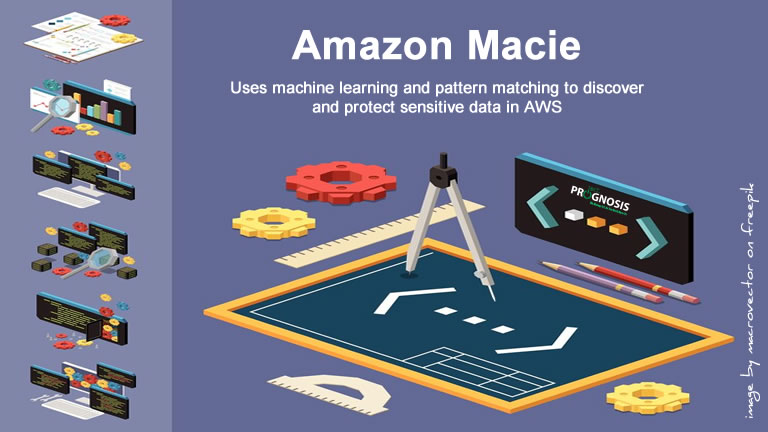
Image of V Model software development isometric composition with gear, icons, code screens, and computer workstations as a simulation of how Amazon Macie uses machine learning and pattern matching to discover and protect sensitive data in AWS.

Securing Sensitive Data in the Cloud: A Comprehensive Guide to Amazon Macie

Data security and privacy are more important than ever. With the increasing amount of sensitive information stored in the cloud, organizations face growing challenges in safeguarding their data. As a service designed to enhance data security and privacy, Amazon Macie helps organizations discover, monitor, and protect sensitive data stored in Amazon S3 (Simple Storage Service).

In this article, we’ll explore how Amazon Macie can help your organization stay compliant and secure, highlight common challenges in data protection, and offer best practices and popular tools to enhance your data security strategy.

Read more

Share

Understanding GDPR: A Comprehensive Guide with Sector-Specific Examples

Image of laptop computer with a padlock and stars concept of GDPR, along with text outlining the key principles of GDPR.

GDPR: A Comprehensive Guide with Sector-Specific Examples

Introduction

The General Data Protection Regulation (GDPR) is a critical piece of legislation that reshaped the landscape of data privacy and security for organizations operating within the European Union (EU) and those dealing with EU citizens’ data. Since its implementation on May 25, 2018, GDPR has set a high standard for data protection, influencing laws worldwide.

In this article, we’ll explore the essentials of GDPR, examine specific examples from various sectors, discuss common challenges organizations face, and provide best practices for compliance. Whether you’re a business owner, a data privacy enthusiast, or simply curious about GDPR, this guide will offer valuable insights.

What is GDPR?

GDPR is a regulation in EU law on data protection and privacy for all individuals within the EU and the European Economic Area (EEA). It also addresses the export of personal data outside the EU and EEA areas. The primary aim of GDPR is to give control to individuals over their personal data and simplify the regulatory environment for international business by unifying the regulation within the EU.

Read more

Share
Share
Share