Cybersecurity Crisis Management: Building Resilient Responses

Simulation of stressed executive instructing employees in office about cybersecurity crisis management.

Cybersecurity Crisis Management: Building Resilient Responses Across Manufacturing, Healthcare, and Finance

When it comes to cybersecurity, it’s not a question of if an incident will occur—it’s when. Whether you’re in manufacturing, healthcare, or finance, cyber threats don’t just disrupt business—they can harm people’s safety, compromise sensitive information, or destabilize markets.

This is why Cybersecurity Crisis Management has become one of the most vital disciplines in modern governance, risk, and compliance (GRC). At its heart, crisis management is about more than just reacting to an incident. It’s about preparing, escalating, containing, and learning from disruptions in a structured way—so your organization can bounce back stronger than before.

In this article, we’ll take a deep dive into the principles of cybersecurity crisis management, explore escalation matrices in detail (with step-by-step guidance for manufacturing, healthcare, and finance), walk through playbook examples, discuss common challenges, and outline how metrics can drive post-incident improvements.

We’ll also highlight some trusted tools and share best practices to help you build resilience in your organization.

Read more

Share

IT Audit Planning Process: A Comprehensive Guide

Time management concept with planning time symbols isometric with businesspeople looking at a planning board simulating an IT audit planning process as a systematic sequence of steps.

In today’s fast-paced digital landscape, effective Information Technology (IT) audit planning is more than a checkbox exercise—it’s a strategic imperative. Whether you’re a small nonprofit, a growing manufacturing firm, or a large healthcare organization, a well-structured IT audit plan helps ensure your systems are secure, compliant, and aligned with business objectives. In this article, we’ll walk through the IT audit planning process from a Governance, Risk, and Compliance (GRC) expert’s perspective, spotlighting how it differs from risk assessment, exploring various audit types, tackling common challenges, and sharing best practices. We’ll also include a concrete, sector-specific example with timelines, and recommend popular tools to streamline your efforts.

Read more

Share

ISO 13485: Clauses, and Effective Implementation for Small Organizations

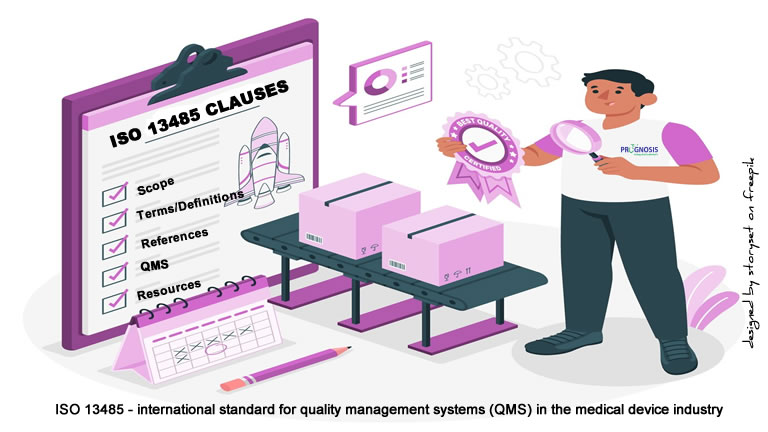
Clipboard with sample text of ISO 13485 main clauses, and items undergoing quality review by a man with a magnifying glass

Understanding ISO 13485: A Guide to Structure, Clauses, and Implementation Best Practices

ISO 13485 is an internationally recognized standard for quality management systems (QMS) in the medical device industry. It ensures that organizations consistently meet regulatory requirements and deliver safe and effective medical devices. For small organizations, navigating this standard can be daunting, but understanding its structure and key clauses simplifies implementation and fosters compliance.

Why ISO 13485 Matters

Medical devices directly impact patient safety, and stringent quality controls are non-negotiable. ISO 13485 provides a comprehensive framework to:

  • Ensure regulatory compliance.
  • Enhance product quality and consistency.
  • Reduce risks and improve customer trust.

Small organizations, despite limited resources, must adhere to these standards to compete effectively in global markets. However, they often face unique challenges—from resource constraints to complex regulatory landscapes.

Read more

Share

Texas Cybersecurity Framework: Fortifying Your Texas Digital Fortress

Half-circle Infographic with text flyouts of the five functions of the Texas Cybersecurity Framework - Identify, Protect, Detect, Respond, and Recover.

Texas Cybersecurity Framework: A Deep Dive into Fortifying Your Texas Digital Fortress

As a GRC (Governance, Risk, and Compliance) expert, I’ve had the privilege of guiding many organizations through the sometimes-dusty trails of cybersecurity. And when it comes to securing digital assets right here in the Lone Star State, one framework consistently stands tall: the Texas Cybersecurity Framework (TCF).

Now, cybersecurity might sound like complicated tech-speak, but at its heart, it’s about protecting what matters most – your data, your operations, and the trust of your customers. Think of the TCF as a well-laid-out blueprint for building a strong and resilient digital fortress. It provides a clear roadmap to help organizations, both big and small, navigate the ever-evolving landscape of cyber threats.

In this deep dive, we’ll unpack the TCF in plain language, exploring its origins, how it’s structured, some of its key components, the hurdles organizations often face, and practical ways to get started. So, grab your virtual Stetson, and let’s get to it!

Read more

Share

ISO 9001 Clause 9.2: A Comprehensive Guide to Internal Audits

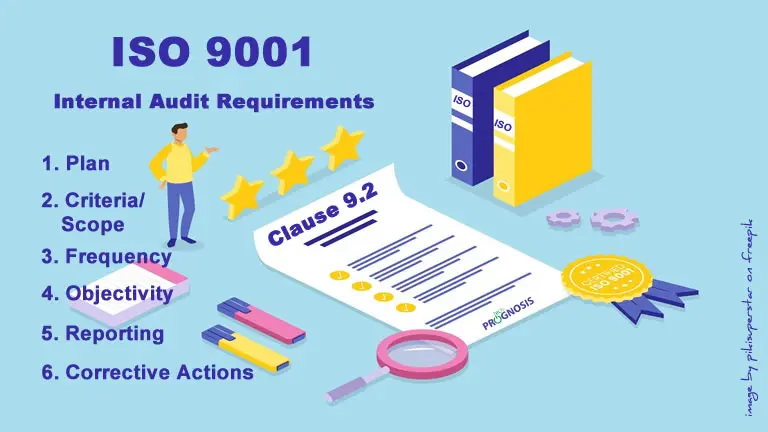
Image of isometric concept of ISO 9001 Clause 2 with ISO 9001 certification badge, a magnifying glass, book binders and a text of the requirements.

When it comes to maintaining a robust Quality Management System (QMS), ISO 9001 serves as the gold standard. Among its many requirements, ISO 9001 Clause 9.2, which deals with internal audits, stands out as a key element. For many organizations, however, the concept of internal audits can feel overwhelming, especially for those unfamiliar with quality management processes.

In this blog, we’ll break down ISO 9001 Clause 9.2 in a way that’s easy to understand. We’ll explore what internal audits are, why they’re essential, and how you can implement them effectively within your organization. Whether you’re a seasoned quality professional or new to the world of ISO standards, this guide will provide practical insights, examples, and actionable steps to help you meet the requirements with confidence.

What is ISO 9001 Clause 9.2?

Clause 9.2 of the ISO 9001 standard focuses on the internal audit process. Internal audits are systematic, independent evaluations of your QMS to determine whether your processes align with the requirements of ISO 9001 and whether they are effectively implemented and maintained.

The purpose of internal audits is to ensure that your organization consistently delivers quality products or services by identifying areas of non-conformance and opportunities for improvement. These audits are not just a compliance requirement but a strategic tool for enhancing your organization’s performance.

Read more

Share

Business Impact Analysis: Principles, Methodologies, Challenges, and Best Practices

Male and female looking at a simulated Business Impact Analysis (BIA) dashboard with a huge magnifying glass.

The Complete Guide to Business Impact Analysis (BIA): Principles, Methodologies, Challenges, and Best Practices

Let’s talk about something that might sound a bit dry at first – Business Impact Analysis, or BIA for short. But trust me, as someone who’s spent years in the trenches of Governance, Risk, and Compliance (GRC), I can tell you, this is anything but boring. In fact, it’s the superhero cape your organization needs to navigate the unexpected.

Imagine a sudden power outage, a supply chain disruption, or even a cyberattack. What happens next? Do you scramble in the dark, hoping things will magically sort themselves out? Or do you have a plan, a roadmap that guides you through the chaos? That roadmap is built on the foundation of a solid BIA.

BIA helps businesses identify critical functions, assess the potential impact of disruptions, and establish strategies to minimize the effects of disruptions on these functions. This guide dives deep into the concept and principles of BIA, highlighting its role in various sectors, methodologies, challenges, and best practices.

Read more

Share
Share
Share