Access Control and the NIST Cybersecurity Framework

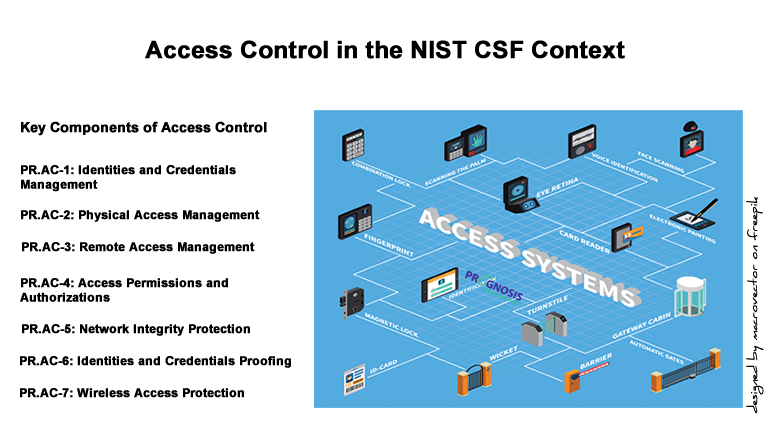
Access control systems isometric flowchart showing security systems using biometric verification, face and voice recognition, accessibility lock, security barriers etc.

Protecting Your Austin Business: A Deep Dive into Access Control and the NIST Cybersecurity Framework

If you’ve ever used a key card to enter your office building or typed a password into your laptop, you’ve experienced access control in action. But behind these everyday interactions lies a sophisticated security discipline that can make or break your organization’s cybersecurity posture—especially here in Austin, where our thriving tech scene and diverse business landscape make us an attractive target for cybercriminals.

As someone who’s spent years helping Texas businesses strengthen their security foundations, I’ve seen firsthand how proper access control can prevent devastating breaches, while poor implementation can lead to catastrophic consequences. Today, let’s explore access control through the lens of the NIST Cybersecurity Framework (CSF) and discuss how Austin organizations can protect their most valuable assets.

What is Access Control in the NIST CSF Context?

The National Institute of Standards and Technology (NIST) Cybersecurity Framework organizes cybersecurity activities into five core functions: Identify, Protect, Detect, Respond, and Recover. Access control falls squarely within the Protect Function, which focuses on developing and implementing appropriate safeguards to ensure delivery of critical services.

Specifically, access control is addressed in the Access Control (PR.AC) category of the Protect function. The NIST CSF defines this as managing access to assets and associated facilities to ensure that only authorized users, processes, or devices can access them—and only in a manner appropriate to their authorization level.

Think of access control as the digital and physical gatekeeper of your organization. It’s the system of policies, procedures, and technologies that determines who can enter your premises, what data they can view, which systems they can use, and what actions they can perform.

In Austin’s competitive business environment, where companies from healthcare startups to financial services firms handle sensitive information daily, robust access control isn’t just good practice—it’s essential for survival.

Read more

Share

Protect Function of the NIST Cybersecurity Framework: A Practical Guide

Infographic concept with a six-point point list of what the Protect function of the NIST Cybersecurity Framework covers like access control, awareness training, data security.

The NIST Cybersecurity Framework Protect Function: A Practical Guide for Small Businesses in Austin, Texas

Cybersecurity often feels overwhelming for small businesses. With headlines about major breaches and new regulations, it’s easy to think that strong cybersecurity is something only large corporations can afford. But the truth is, businesses of every size—whether you’re running a coffee shop in East Austin, a dental clinic in South Lamar, or a boutique retail store downtown—have critical systems, data, and people to protect.

That’s where the Protect Function of the NIST Cybersecurity Framework (CSF) comes in. While the framework sounds technical, it’s essentially a guide to help organizations reduce risk by protecting what matters most. In this article, we’ll break down the Protect Function in simple terms, explore how Austin businesses can apply it, and highlight practical steps you can take today.


What Is the Protect Function?

The NIST CSF has five core functions: Identify, Protect, Detect, Respond, and Recover. The Protect function focuses on proactive measures—safeguarding your people, assets, systems, and data before something goes wrong.

Think of it as putting locks on your doors, training your staff, and installing smoke detectors before there’s a fire. Protection doesn’t eliminate all risks, but it makes you less vulnerable and better prepared.

Read more

Share

NBA Fines And Non-Compliance Lessons for SMBs

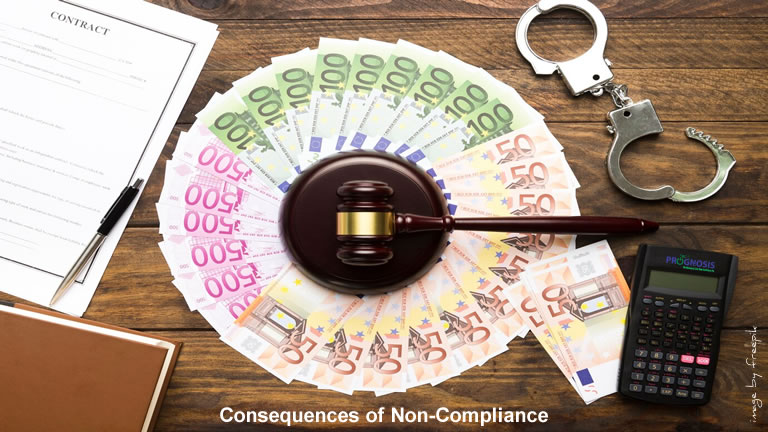
Image of an arrangement with money, gavel, calculator, and contract illustrating the consequences of non-compliance with laws, rules, and regulations.

NBA Fines And Non-Compliance Lessons for SMBs

Regulations on the local, state, and federal levels are on the rise and this is putting a lot of pressure on compliance efforts of Small and Medium-sized businesses (SMBs) and exposing the fact that these organizations can only avoid costly fines and/or lawsuits for non-compliance by maintaining strict compliance throughout their information management processes.

I found the fines levied by the National Basketball Association (NBA) on players including the likes of the late Los Angeles Lakers Great, Kobe Bryant, and Mark Cuban, the owner of the Dallas Mavericks basketball team, among others, as a good lesson on the cost of non-compliance.

The NBA has consistently fined players who were in non-compliance of its rules and these violations range from the serious to what one could argue is the absurd – like kicking a ball in frustration or throwing a basketball into the stands in celebration of a win.

Read more

Share

Your Business and the CIA Triad: What’s your Status?

The CIA triad is an information systems security term that refers to the critical task of data protection. The core goal of information security is to assure the confidentiality, integrity and availability of all the sensitive data kept by an organization.  That’s critical for the continuity of business operations, as well as legally and ethically required.
So what is the CIA triad?
It provides for safely using paper- and computer-based data systems, email, fax machines, telephones, web browsers, and even just talking out loud through the provision of:

Confidentiality of data – where you ensure that critical data is only accessed by people with proper approval and on a need to know basis.
Confidentiality is related to the broader concept of data privacy – the act of limiting access to Personally Identifiable Information (PII). In the US, a range of state and federal laws, with abbreviations like FERPA, FSMA, and HIPAA, set the legal terms of privacy.

Read more

Share
Share
Share