Cloud Security Threats and Mitigation: A Guide for Financial Services in Austin, Texas

Cloud security threats that target financial services in Austin, Texas like spam threats, hackers, fraud, password thefts, and mitigation solutions like email security, firewalls, data security

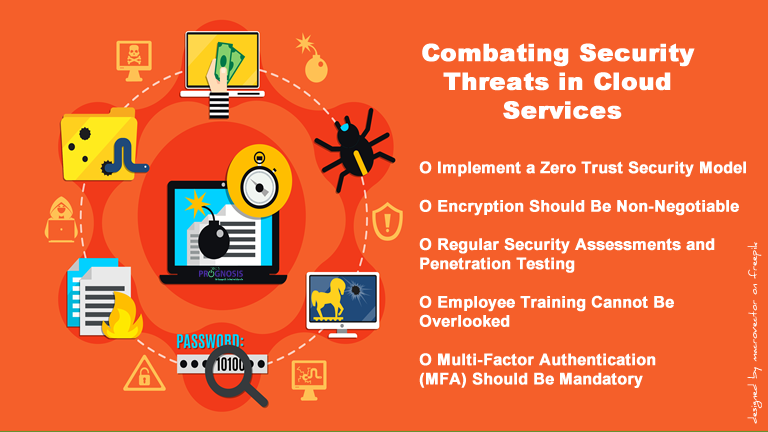
Combating Cloud Security Threats in Cloud Computing: A Guide to Cloud Security for Austin’s Financial Services

As someone who’s spent over a decade helping financial institutions navigate the complex world of cybersecurity, I’ve watched Austin’s financial services sector transform dramatically. From the bustling tech corridors along MoPac to the financial districts downtown, our city’s banks, credit unions, and fintech startups are increasingly moving their operations to the cloud. But with this shift comes the critical questions I hear almost daily:  “How do we combat security threats in cloud computing”, and “How do we keep our customers’ financial data safe in the cloud?”

Let me share what I’ve learned about security threats in our industry, drawing from real experiences right here in Central Texas, particularly as artificial intelligence reshapes how we think about data protection and financial services.

Read more

Share

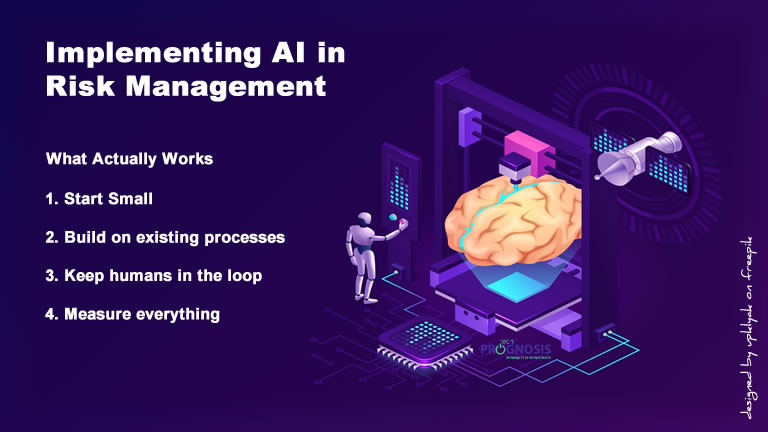
AI Implementation in Financial Risk Management: A Practical Guide

Technology isometric with ai robot, brain and text simulating AI implementation processes.

Implementing AI in Financial Risk Management: A Practical Guide for Mid-Size Banks

In my 15 years of working with financial institutions on governance and risk initiatives, I’ve never seen as much excitement – and anxiety – as I do now around AI implementation. Let’s cut through the hype and talk about what really works.

Read more

Share

Information Technology (IT) Risk Analysis: Policy Reviews and Risk Reports Protect Your Organization

Business information technology or IT risk analysis concept isometric vector illustration process working with database on data center system for diagrams of management statistics and operational reports.

Understanding Information Technology Risk Analysis: How Policy Reviews and Risk Reports Protect Your Organization

Organizations face an ever-growing array of cybersecurity threats. From ransomware attacks that can cripple operations to data breaches that expose sensitive customer information, the stakes have never been higher. This reality makes information technology risk analysis not just a technical necessity but a fundamental business practice that can determine an organization’s survival and success.

Risk analysis in IT involves systematically identifying, evaluating, and prioritizing potential threats to an organization’s information assets. At its core, this process helps organizations understand what could go wrong, how likely these scenarios are, and what impact they might have on business operations. One of the most effective approaches to conducting this analysis involves reviewing information security policy documents against established industry standards and regulatory requirements, then translating findings into clear, actionable risk reports.

Read more

Share

Continuity Planning: Unexpected Disasters Your IT Provider Should Be Planning For

Simulation of risk management consultants looking at a diagram illustration of a business continuity planning dashboard.

Continuity Planning: The Unexpected Disaster Your IT Provider Should Be Planning For

Power outages, cyberattacks, hardware failures and natural disasters rarely arrive with a warning, and when they hit, the impact on small businesses can be devastating. Many assume that having a backup is enough, but the truth is, restoring a file isn’t the same as staying operational. If you can’t access systems, support remote work or keep your team and clients in the loop, even a short disruption can turn into a long-term setback. A reliable IT partner should prepare you for these moments – not just with backups, but with a complete plan to keep your business running no matter what.

Read more

Share

Cybersecurity Crisis Management: Building Resilient Responses

Simulation of stressed executive instructing employees in office about cybersecurity crisis management.

Cybersecurity Crisis Management: Building Resilient Responses Across Manufacturing, Healthcare, and Finance

When it comes to cybersecurity, it’s not a question of if an incident will occur—it’s when. Whether you’re in manufacturing, healthcare, or finance, cyber threats don’t just disrupt business—they can harm people’s safety, compromise sensitive information, or destabilize markets.

This is why Cybersecurity Crisis Management has become one of the most vital disciplines in modern governance, risk, and compliance (GRC). At its heart, crisis management is about more than just reacting to an incident. It’s about preparing, escalating, containing, and learning from disruptions in a structured way—so your organization can bounce back stronger than before.

In this article, we’ll take a deep dive into the principles of cybersecurity crisis management, explore escalation matrices in detail (with step-by-step guidance for manufacturing, healthcare, and finance), walk through playbook examples, discuss common challenges, and outline how metrics can drive post-incident improvements.

We’ll also highlight some trusted tools and share best practices to help you build resilience in your organization.

Read more

Share

Continuous Threat Exposure Management (CTEM) for CPAs in Texas

Isometric vector illustration simulating data analysts reviewing a Continuous Threat Exposure Management (CTEM) process.

Why Continuous Threat Exposure Management (CTEM) Matters for CPAs in Texas

In today’s complex digital world, Certified Public Accountants (CPAs) do much more than crunch numbers. They handle sensitive financial data, serve as trusted advisors to individuals and businesses, and are increasingly targeted by cybercriminals looking for a backdoor into confidential records. The stakes are especially high in Texas, where CPA firms often support clients across oil and gas, healthcare, and technology sectors—industries with their own layers of risk. To stay ahead of evolving threats, forward-thinking CPA firms are embracing a powerful new approach: Continuous Threat Exposure Management (CTEM).

This isn’t just another cybersecurity buzzword—CTEM is rapidly becoming a critical pillar of modern governance, risk, and compliance (GRC) strategies.

In this article, we’ll explore what Continuous Threat Exposure Management (CTEM) is, why it is essential for CPAs, and how GRC platforms can help you stay proactive—not reactive—about cybersecurity. We’ll also introduce tools that can make CTEM practical and accessible for CPA firms of all sizes, and offer guidance on how to get started.

Read more

Share
Share
Share