Plan of Action and Milestones (POA&Ms) in the NIST RMF

Isometric composition simulating a Plan of Action and Milestones (POA&M) strategy session with editable text and little human characters with plans and calendars.

How Businesses in Round Rock Can Strengthen Cybersecurity with Plan of Action and Milestones POA&Ms, Risk Registers, and NIST RMF

In today’s hyper-connected world, cybersecurity isn’t just an IT issue, it’s a core business risk. For businesses across Round Rock, Texas, and neighboring areas like Georgetown, Cedar Park, and Pflugerville, the question is no longer if cybersecurity threats will strike, but when.

The good news? With the right risk management approach, you can prepare, respond, and continuously improve.

This article explores how small-to-midsize organizations can use key tools from the NIST Risk Management Framework (RMF)—specifically Plan of Action and Milestones (POA&Ms) and Risk Registers, to effectively manage security control weaknesses, reduce risk, and maintain a strong security posture.

You’ll also follow a relatable real-world scenario with Peter, an IT manager navigating a system assessment.

Read more

Share

HIPAA Readiness in Round Rock, TX: A Virtual CISO’s Guide to Compliance for Healthcare Providers

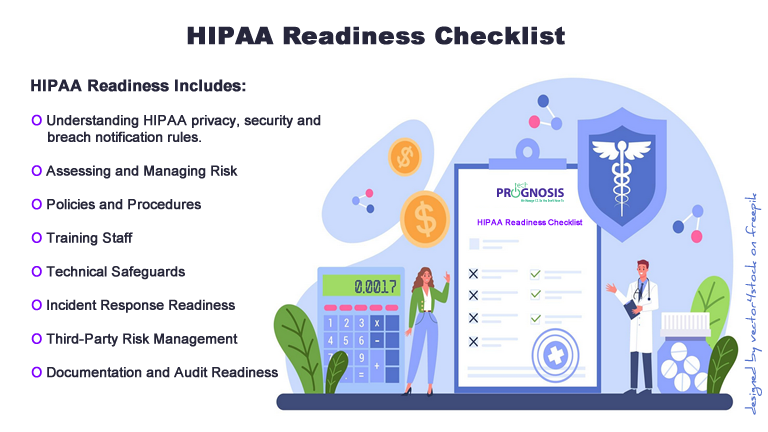
Flat vector illustration concept simulating HIPAA readiness with a checklist, a tiny doctor and nurse, and text of what readiness includes.

HIPAA Readiness in Round Rock, TX: A Virtual CISO’s Guide to Compliance for Healthcare Providers and PHI Handlers


Author: Daniel Ihonvbere, Virtual Chief Information Security Officer (vCISO)
Reading Time: ~10 minutes
Ideal For: Healthcare administrators, clinic managers, compliance officers, IT leaders, and business associates working with PHI in Round Rock, Austin, Georgetown, Pflugerville, and surrounding Texas cities.


When it comes to HIPAA compliance, the stakes are high—and not just in terms of fines. Patient trust, operational integrity, and even your practice’s reputation hinge on your ability to secure Protected Health Information (PHI) and maintain regulatory alignment.

As a Virtual CISO guiding organizations in and around Round Rock, Texas, I’ve seen firsthand that HIPAA compliance is not a one-time checkbox—it’s an ongoing, risk-based journey.

As your virtual CISO, I’ll guide you through a systematic HIPAA compliance journey that balances security requirements with business operations. This post breaks down what HIPAA readiness means and provides a comprehensive and actionable roadmap to achieve and sustain HIPAA readiness, tailored to healthcare entities and their partners.

Let’s walk through the 10 essential steps of becoming HIPAA-ready—with clarity, confidence, and compliance.

Read more

Share

Risk Assessment Program: Real-World Scenarios & Smart Strategies

Simulation of people reviewing a risk assessment program showing a checklist dashboard on a laptop.

Why Round Rock Businesses Can’t Afford to Skip a Risk Assessment Program: Real-World Scenarios & Smart Strategies

Learn how Round Rock, Texas businesses can manage cybersecurity and operational risks using practical, real-world examples. Understand PII breaches, DDoS attacks, and software update failures — and how to build a proactive risk management program or plan under the NIST RMF.

Estimated Reading Time: 10 minutes (≈1,950 words)


Introduction

Round Rock and its neighboring communities — Georgetown, Cedar Park, Pflugerville, Hutto, and Taylor — are thriving tech hubs. With that growth comes a new level of responsibility: keeping data safe, systems reliable, and operations compliant.

As a Governance, Risk, and Compliance (GRC) specialist, I’ve seen how even small and mid-sized companies can suffer serious setbacks when they don’t treat risk assessment as a business priority. This post breaks down how to identify, categorize, and document risks — using three realistic examples your business might face.

Read more

Share

Access Control and the NIST Cybersecurity Framework

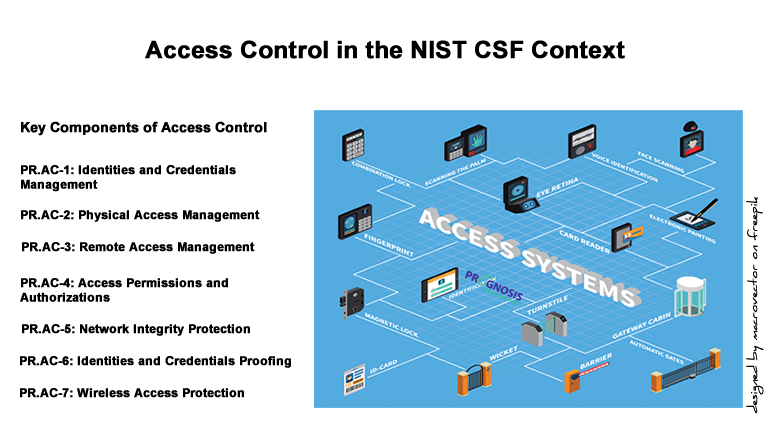
Access control systems isometric flowchart showing security systems using biometric verification, face and voice recognition, accessibility lock, security barriers etc.

Protecting Your Austin Business: A Deep Dive into Access Control and the NIST Cybersecurity Framework

If you’ve ever used a key card to enter your office building or typed a password into your laptop, you’ve experienced access control in action. But behind these everyday interactions lies a sophisticated security discipline that can make or break your organization’s cybersecurity posture—especially here in Austin, where our thriving tech scene and diverse business landscape make us an attractive target for cybercriminals.

As someone who’s spent years helping Texas businesses strengthen their security foundations, I’ve seen firsthand how proper access control can prevent devastating breaches, while poor implementation can lead to catastrophic consequences. Today, let’s explore access control through the lens of the NIST Cybersecurity Framework (CSF) and discuss how Austin organizations can protect their most valuable assets.

What is Access Control in the NIST CSF Context?

The National Institute of Standards and Technology (NIST) Cybersecurity Framework organizes cybersecurity activities into five core functions: Identify, Protect, Detect, Respond, and Recover. Access control falls squarely within the Protect Function, which focuses on developing and implementing appropriate safeguards to ensure delivery of critical services.

Specifically, access control is addressed in the Access Control (PR.AC) category of the Protect function. The NIST CSF defines this as managing access to assets and associated facilities to ensure that only authorized users, processes, or devices can access them—and only in a manner appropriate to their authorization level.

Think of access control as the digital and physical gatekeeper of your organization. It’s the system of policies, procedures, and technologies that determines who can enter your premises, what data they can view, which systems they can use, and what actions they can perform.

In Austin’s competitive business environment, where companies from healthcare startups to financial services firms handle sensitive information daily, robust access control isn’t just good practice—it’s essential for survival.

Read more

Share

Protect Function of the NIST Cybersecurity Framework: A Practical Guide

Infographic concept with a six-point point list of what the Protect function of the NIST Cybersecurity Framework covers like access control, awareness training, data security.

The NIST Cybersecurity Framework Protect Function: A Practical Guide for Small Businesses in Austin, Texas

Cybersecurity often feels overwhelming for small businesses. With headlines about major breaches and new regulations, it’s easy to think that strong cybersecurity is something only large corporations can afford. But the truth is, businesses of every size—whether you’re running a coffee shop in East Austin, a dental clinic in South Lamar, or a boutique retail store downtown—have critical systems, data, and people to protect.

That’s where the Protect Function of the NIST Cybersecurity Framework (CSF) comes in. While the framework sounds technical, it’s essentially a guide to help organizations reduce risk by protecting what matters most. In this article, we’ll break down the Protect Function in simple terms, explore how Austin businesses can apply it, and highlight practical steps you can take today.


What Is the Protect Function?

The NIST CSF has five core functions: Identify, Protect, Detect, Respond, and Recover. The Protect function focuses on proactive measures—safeguarding your people, assets, systems, and data before something goes wrong.

Think of it as putting locks on your doors, training your staff, and installing smoke detectors before there’s a fire. Protection doesn’t eliminate all risks, but it makes you less vulnerable and better prepared.

Read more

Share

Ethical AI Governance Framework for Risk Assessment in Modern Banking

Ethical AI Governance Framework for risk assessment in modern banking concept with artificial intelligence humanoid with neural network and big data technology.

Ethical AI Governance Framework: A Practical Guide to AI Governance in Banking Risk Assessment

Picture this: You’re a risk officer at a major bank, and your AI system just flagged a small business loan application as high-risk. The applicant is a talented entrepreneur from an underserved community with a solid business plan but limited credit history. Your AI model, trained on decades of lending data, sees patterns that correlate with higher default rates. But here’s the catch – those patterns might reflect historical biases rather than true risk indicators. Perhaps, it is time to develop an ethical AI governance framework for Risk Assessment that ensures responsible AI use while maintaining innovation.

As artificial intelligence transforms how banks assess risk and make decisions, we’re witnessing a fundamental shift in the financial services landscape. AI promises faster decisions, better risk prediction, and improved customer experiences. Yet with this power comes unprecedented ethical challenges that keep chief risk officers awake at night. How do we harness AI’s potential while ensuring fairness, transparency, and accountability?

Welcome to the complex world of AI ethics in banking, where innovation meets responsibility at every turn.

Let’s dive into this critical conversation that’s reshaping modern banking. We will look at key ethical considerations when using AI for risk assessment in banking, and for each consideration we will provide a specific example of how it might manifest in practice.

Read more

Share
Share
Share