ISO 13485: Clauses, and Effective Implementation for Small Organizations

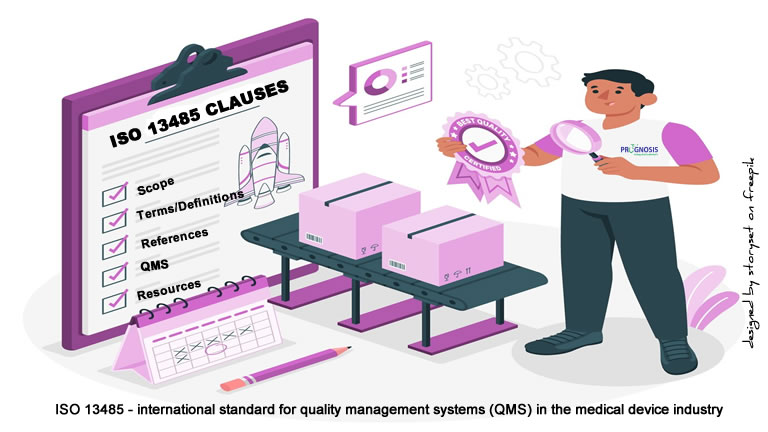
Clipboard with sample text of ISO 13485 main clauses, and items undergoing quality review by a man with a magnifying glass

Understanding ISO 13485: A Guide to Structure, Clauses, and Implementation Best Practices

ISO 13485 is an internationally recognized standard for quality management systems (QMS) in the medical device industry. It ensures that organizations consistently meet regulatory requirements and deliver safe and effective medical devices. For small organizations, navigating this standard can be daunting, but understanding its structure and key clauses simplifies implementation and fosters compliance.

Why ISO 13485 Matters

Medical devices directly impact patient safety, and stringent quality controls are non-negotiable. ISO 13485 provides a comprehensive framework to:

  • Ensure regulatory compliance.
  • Enhance product quality and consistency.
  • Reduce risks and improve customer trust.

Small organizations, despite limited resources, must adhere to these standards to compete effectively in global markets. However, they often face unique challenges—from resource constraints to complex regulatory landscapes.

Read more

Share

Phishing Protection Checklist for Law Firms

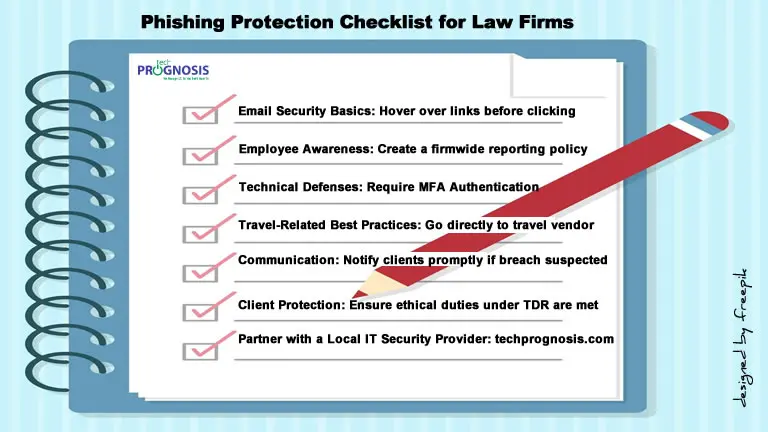
Texts in book binder format of critical phishing protection checklist for law firms.

Phishing Protection Checklist for Law Firms

Safeguard Your Legal Practice from Email Scams—Especially During Travel Season

Below is a Downloadable Phishing Protection Checklist tailored for law firms in the Austin, Texas area. It’s designed to help your legal team quickly spot phishing scams—especially travel-related ones—and take proactive steps to protect confidential data, client trust, and firm finances.

🔒 Email Safety Basics

✔️ Double-check sender email addresses before opening messages
✔️ Never click links in unexpected travel confirmation emails
✔️ Avoid downloading attachments unless verified
✔️ Hover over hyperlinks to see the actual destination URL
✔️ Use a spam filter and block known malicious domains

Read more

Share

Chatbots: The Dark Side

Simulation of a chatbot with chat bubbles on a smartphone

The Dark Side Of Chatbots: Who’s Really Listening To Your Conversations?

Chatbots like ChatGPT, Gemini, Microsoft Copilot and the recently released DeepSeek have revolutionized how we interact with technology, offering assistance with almost every task imaginable – from drafting e-mails and generating content to writing your grocery list while keeping it within your budget.

But as these AI-driven tools weave themselves into our daily routines, questions about data privacy and security are becoming harder to ignore. What exactly happens to the information you share with these bots, and what risks are you unwittingly exposing yourself to?

These bots are always on, always listening and always collecting data on YOU. Some are more discreet about it than others, but make no mistake – they’re all doing it.

So, the real question becomes: How much of your data are they collecting, and where does it go?

Read more

Share

Texas Cybersecurity Framework: Fortifying Your Texas Digital Fortress

Half-circle Infographic with text flyouts of the five functions of the Texas Cybersecurity Framework - Identify, Protect, Detect, Respond, and Recover.

Texas Cybersecurity Framework: A Deep Dive into Fortifying Your Texas Digital Fortress

As a GRC (Governance, Risk, and Compliance) expert, I’ve had the privilege of guiding many organizations through the sometimes-dusty trails of cybersecurity. And when it comes to securing digital assets right here in the Lone Star State, one framework consistently stands tall: the Texas Cybersecurity Framework (TCF).

Now, cybersecurity might sound like complicated tech-speak, but at its heart, it’s about protecting what matters most – your data, your operations, and the trust of your customers. Think of the TCF as a well-laid-out blueprint for building a strong and resilient digital fortress. It provides a clear roadmap to help organizations, both big and small, navigate the ever-evolving landscape of cyber threats.

In this deep dive, we’ll unpack the TCF in plain language, exploring its origins, how it’s structured, some of its key components, the hurdles organizations often face, and practical ways to get started. So, grab your virtual Stetson, and let’s get to it!

Read more

Share

Shortcuts in IT Security: The Hidden Dangers

Flat lay black arrows with text describing some shortcuts in IT security that businesses may take, and the hidden dangers in those decisions. Structure of the Texas Cybersecurity Framework.

The Hidden Dangers of Shortcuts in IT Security: A GRC Expert’s Perspective

The pressure to move quickly in the fast-paced world of technology can sometimes lead organizations, especially small and medium-sized businesses (SMBs), to take shortcuts in IT security. While these shortcuts may seem like a quick fix to save time or reduce costs, they often come with hidden dangers that can jeopardize the entire organization’s security posture.

As a GRC (Governance, Risk, and Compliance) expert, I’ve seen firsthand how these seemingly minor decisions can lead to significant risks, particularly for SMBs with limited resources.

In this article, we will explore the impact of these shortcuts on SMBs, discuss common challenges in IT and cybersecurity management, and offer best practices to safeguard your business. We’ll also recommend affordable options for managing IT security effectively.

Read more

Share

ISO 9001 Clause 9.2: A Comprehensive Guide to Internal Audits

Image of isometric concept of ISO 9001 Clause 2 with ISO 9001 certification badge, a magnifying glass, book binders and a text of the requirements.

When it comes to maintaining a robust Quality Management System (QMS), ISO 9001 serves as the gold standard. Among its many requirements, ISO 9001 Clause 9.2, which deals with internal audits, stands out as a key element. For many organizations, however, the concept of internal audits can feel overwhelming, especially for those unfamiliar with quality management processes.

In this blog, we’ll break down ISO 9001 Clause 9.2 in a way that’s easy to understand. We’ll explore what internal audits are, why they’re essential, and how you can implement them effectively within your organization. Whether you’re a seasoned quality professional or new to the world of ISO standards, this guide will provide practical insights, examples, and actionable steps to help you meet the requirements with confidence.

What is ISO 9001 Clause 9.2?

Clause 9.2 of the ISO 9001 standard focuses on the internal audit process. Internal audits are systematic, independent evaluations of your QMS to determine whether your processes align with the requirements of ISO 9001 and whether they are effectively implemented and maintained.

The purpose of internal audits is to ensure that your organization consistently delivers quality products or services by identifying areas of non-conformance and opportunities for improvement. These audits are not just a compliance requirement but a strategic tool for enhancing your organization’s performance.

Read more

Share
Share
Share