Cybersecurity Crisis Management: Building Resilient Responses

Simulation of stressed executive instructing employees in office about cybersecurity crisis management.

Cybersecurity Crisis Management: Building Resilient Responses Across Manufacturing, Healthcare, and Finance

When it comes to cybersecurity, it’s not a question of if an incident will occur—it’s when. Whether you’re in manufacturing, healthcare, or finance, cyber threats don’t just disrupt business—they can harm people’s safety, compromise sensitive information, or destabilize markets.

This is why Cybersecurity Crisis Management has become one of the most vital disciplines in modern governance, risk, and compliance (GRC). At its heart, crisis management is about more than just reacting to an incident. It’s about preparing, escalating, containing, and learning from disruptions in a structured way—so your organization can bounce back stronger than before.

In this article, we’ll take a deep dive into the principles of cybersecurity crisis management, explore escalation matrices in detail (with step-by-step guidance for manufacturing, healthcare, and finance), walk through playbook examples, discuss common challenges, and outline how metrics can drive post-incident improvements.

We’ll also highlight some trusted tools and share best practices to help you build resilience in your organization.

Read more

Share

Continuous Threat Exposure Management (CTEM) for CPAs in Texas

Isometric vector illustration simulating data analysts reviewing a Continuous Threat Exposure Management (CTEM) process.

Why Continuous Threat Exposure Management (CTEM) Matters for CPAs in Texas

In today’s complex digital world, Certified Public Accountants (CPAs) do much more than crunch numbers. They handle sensitive financial data, serve as trusted advisors to individuals and businesses, and are increasingly targeted by cybercriminals looking for a backdoor into confidential records. The stakes are especially high in Texas, where CPA firms often support clients across oil and gas, healthcare, and technology sectors—industries with their own layers of risk. To stay ahead of evolving threats, forward-thinking CPA firms are embracing a powerful new approach: Continuous Threat Exposure Management (CTEM).

This isn’t just another cybersecurity buzzword—CTEM is rapidly becoming a critical pillar of modern governance, risk, and compliance (GRC) strategies.

In this article, we’ll explore what Continuous Threat Exposure Management (CTEM) is, why it is essential for CPAs, and how GRC platforms can help you stay proactive—not reactive—about cybersecurity. We’ll also introduce tools that can make CTEM practical and accessible for CPA firms of all sizes, and offer guidance on how to get started.

Read more

Share

Cloud Technology: Understanding the Invisible Backbone of Modern Life

Cloud technology isometric showing icons of a cloud, datacenters and a laptop, with text of best practices for managing cloud dependence responsibly.

Cloud Technology Is Like Air: Understanding the Invisible Backbone of Modern Life

Introduction: The Air We Breathe, the Cloud We Use

We rarely think about the air around us until something disrupts it — a smoky day, a strong gust, or a breathless moment. The same goes for cloud technology. It’s always there, powering everything from our mobile apps and streaming platforms to business-critical systems and secure backups. Yet, unless there’s a service outage or data breach, many people don’t give it a second thought.

But in today’s digital-first world, understanding cloud technology is as essential as understanding electricity or plumbing. This blog explores the analogy of cloud computing as air, revealing just how pervasive and vital the cloud has become in both personal and professional contexts.

Read more

Share

Fake Travel Confirmation Emails That Could Breach Your Law Firm

A lady in a red dress and travel suitcase is talking with an air travel booking agent with an airplane image in the background. There is a highlight of the damage a single successful phishing attack from fake travel confirmation emails can cause.

🎯Fake Travel Confirmation Emails: Legal Professionals in Austin, Don’t Let Fake Emails Breach Your Law Firm

Planning a summer getaway? Cybercriminals are planning their next move, too—and your law firm may be the target.

As a cybersecurity professional, I see it all the time. Fake travel confirmation emails land in someone’s inbox, dressed up to look like they are from Delta, Marriott, or Expedia. The logo checks out. The formatting is perfect. The subject line sounds urgent. And then—click. Just like that, login credentials or credit card data are in the hands of cybercriminals.

In fact, 83% of organizations experienced a phishing attack in 2023, according to Proofpoint’s State of the Phish Report. And summer travel season is a gold mine for scammers.

Read more

Share

Windows 10 End of Support: What Happens To Healthcare Applications

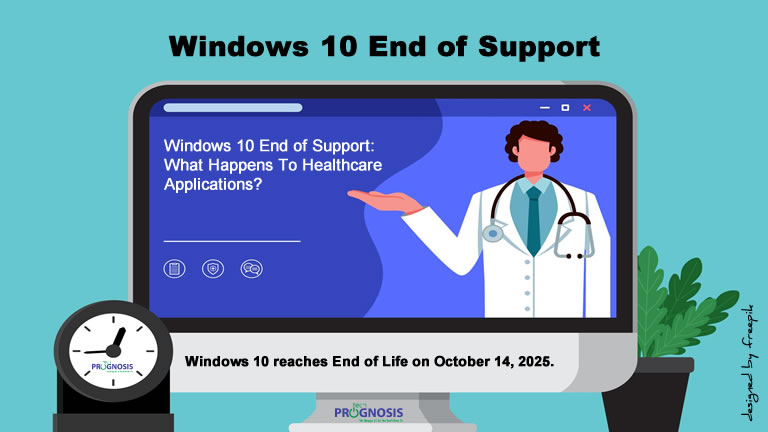
A computer desktop monitor showing an image of a doctor with a stethoscope around his neck gesturing toward a text on the screen asking the question: "Windows 10 End of Support: What Happens to Healthcare Applications”

What Happens to Healthcare Applications After Windows 10 End of Support?

A Cybersecurity Expert’s Guide for Clinics, Practices, and Health Systems

📅 October 14, 2025 is more than just a date on the calendar. It’s when Windows 10 reaches end of life, and with that, your healthcare IT environment could be at serious risk.

Whether you’re a small practice using EHR software on a few desktops or a larger provider with integrated patient care systems, the end of Windows 10 support could expose your patients’ data, impact compliance with HIPAA, and disrupt care delivery.

If you’re still using Windows 10 after the cutoff date, it’s not just your operating system that will be at risk – your critical healthcare applications could be affected too. Let’s break down what you need to know.

Read more

Share

Data Lifecycle Implementation and Records Management

Infographic showing texts of the six stages of data lifecycle in data lifecycle implementation and records management

Data Lifecycle Implementation and Records Management: A Comprehensive Guide

In today’s data-driven world, effective data lifecycle management and records management are crucial for organizations of all sizes. Organizations collect and store vast amounts of information. Managing this data efficiently is crucial to ensuring that it is both useful and compliant with regulations. This is where data lifecycle implementation and records management come into play. Understanding these concepts can seem daunting, but with the right approach, any organization can implement effective strategies to manage their data.

This comprehensive guide will delve into the concepts of data lifecycle implementation, records management, retention, and remediation. We’ll also explore common challenges faced by organizations, best practices to overcome these challenges, and recommend popular tools to streamline your data management processes.

Read more

Share
Share
Share