Cloud Security Threats and Mitigation: A Guide for Financial Services in Austin, Texas

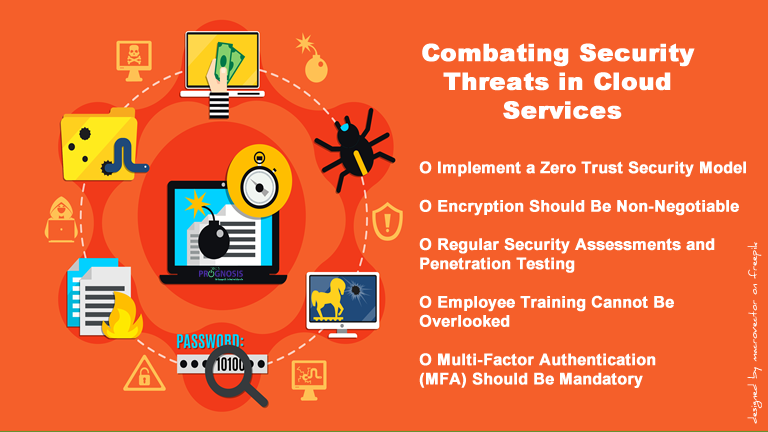
Cloud security threats that target financial services in Austin, Texas like spam threats, hackers, fraud, password thefts, and mitigation solutions like email security, firewalls, data security

Combating Cloud Security Threats in Cloud Computing: A Guide to Cloud Security for Austin’s Financial Services

As someone who’s spent over a decade helping financial institutions navigate the complex world of cybersecurity, I’ve watched Austin’s financial services sector transform dramatically. From the bustling tech corridors along MoPac to the financial districts downtown, our city’s banks, credit unions, and fintech startups are increasingly moving their operations to the cloud. But with this shift comes the critical questions I hear almost daily:  “How do we combat security threats in cloud computing”, and “How do we keep our customers’ financial data safe in the cloud?”

Let me share what I’ve learned about security threats in our industry, drawing from real experiences right here in Central Texas, particularly as artificial intelligence reshapes how we think about data protection and financial services.

Read more

Share

Cybersecurity Crisis Management: Building Resilient Responses

Simulation of stressed executive instructing employees in office about cybersecurity crisis management.

Cybersecurity Crisis Management: Building Resilient Responses Across Manufacturing, Healthcare, and Finance

When it comes to cybersecurity, it’s not a question of if an incident will occur—it’s when. Whether you’re in manufacturing, healthcare, or finance, cyber threats don’t just disrupt business—they can harm people’s safety, compromise sensitive information, or destabilize markets.

This is why Cybersecurity Crisis Management has become one of the most vital disciplines in modern governance, risk, and compliance (GRC). At its heart, crisis management is about more than just reacting to an incident. It’s about preparing, escalating, containing, and learning from disruptions in a structured way—so your organization can bounce back stronger than before.

In this article, we’ll take a deep dive into the principles of cybersecurity crisis management, explore escalation matrices in detail (with step-by-step guidance for manufacturing, healthcare, and finance), walk through playbook examples, discuss common challenges, and outline how metrics can drive post-incident improvements.

We’ll also highlight some trusted tools and share best practices to help you build resilience in your organization.

Read more

Share

Cloud Technology: Understanding the Invisible Backbone of Modern Life

Cloud technology isometric showing icons of a cloud, datacenters and a laptop, with text of best practices for managing cloud dependence responsibly.

Cloud Technology Is Like Air: Understanding the Invisible Backbone of Modern Life

Introduction: The Air We Breathe, the Cloud We Use

We rarely think about the air around us until something disrupts it — a smoky day, a strong gust, or a breathless moment. The same goes for cloud technology. It’s always there, powering everything from our mobile apps and streaming platforms to business-critical systems and secure backups. Yet, unless there’s a service outage or data breach, many people don’t give it a second thought.

But in today’s digital-first world, understanding cloud technology is as essential as understanding electricity or plumbing. This blog explores the analogy of cloud computing as air, revealing just how pervasive and vital the cloud has become in both personal and professional contexts.

Read more

Share

Fake Travel Confirmation Emails That Could Breach Your Law Firm

A lady in a red dress and travel suitcase is talking with an air travel booking agent with an airplane image in the background. There is a highlight of the damage a single successful phishing attack from fake travel confirmation emails can cause.

🎯Fake Travel Confirmation Emails: Legal Professionals in Austin, Don’t Let Fake Emails Breach Your Law Firm

Planning a summer getaway? Cybercriminals are planning their next move, too—and your law firm may be the target.

As a cybersecurity professional, I see it all the time. Fake travel confirmation emails land in someone’s inbox, dressed up to look like they are from Delta, Marriott, or Expedia. The logo checks out. The formatting is perfect. The subject line sounds urgent. And then—click. Just like that, login credentials or credit card data are in the hands of cybercriminals.

In fact, 83% of organizations experienced a phishing attack in 2023, according to Proofpoint’s State of the Phish Report. And summer travel season is a gold mine for scammers.

Read more

Share

IT Audit Planning Process: A Comprehensive Guide

Time management concept with planning time symbols isometric with businesspeople looking at a planning board simulating an IT audit planning process as a systematic sequence of steps.

In today’s fast-paced digital landscape, effective Information Technology (IT) audit planning is more than a checkbox exercise—it’s a strategic imperative. Whether you’re a small nonprofit, a growing manufacturing firm, or a large healthcare organization, a well-structured IT audit plan helps ensure your systems are secure, compliant, and aligned with business objectives. In this article, we’ll walk through the IT audit planning process from a Governance, Risk, and Compliance (GRC) expert’s perspective, spotlighting how it differs from risk assessment, exploring various audit types, tackling common challenges, and sharing best practices. We’ll also include a concrete, sector-specific example with timelines, and recommend popular tools to streamline your efforts.

Read more

Share

Phishing Protection Checklist for Law Firms

Texts in book binder format of critical phishing protection checklist for law firms.

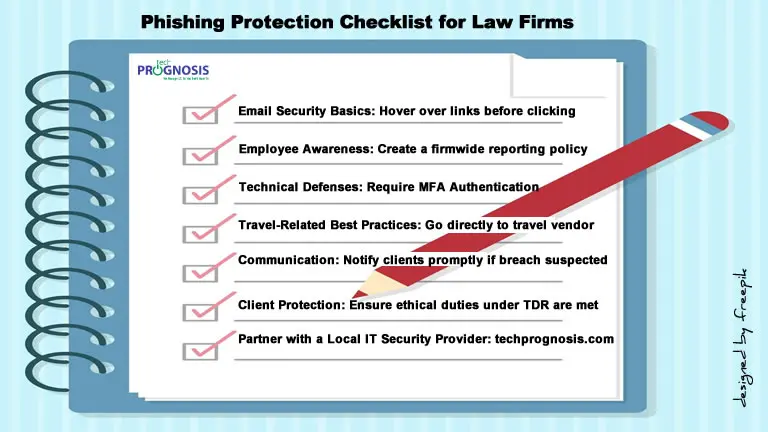
Phishing Protection Checklist for Law Firms

Safeguard Your Legal Practice from Email Scams—Especially During Travel Season

Below is a Downloadable Phishing Protection Checklist tailored for law firms in the Austin, Texas area. It’s designed to help your legal team quickly spot phishing scams—especially travel-related ones—and take proactive steps to protect confidential data, client trust, and firm finances.

🔒 Email Safety Basics

✔️ Double-check sender email addresses before opening messages
✔️ Never click links in unexpected travel confirmation emails
✔️ Avoid downloading attachments unless verified
✔️ Hover over hyperlinks to see the actual destination URL
✔️ Use a spam filter and block known malicious domains

Read more

Share
Share
Share