Business Impact Analysis: Principles, Methodologies, Challenges, and Best Practices

Male and female looking at a simulated Business Impact Analysis (BIA) dashboard with a huge magnifying glass.

The Complete Guide to Business Impact Analysis (BIA): Principles, Methodologies, Challenges, and Best Practices

Let’s talk about something that might sound a bit dry at first – Business Impact Analysis, or BIA for short. But trust me, as someone who’s spent years in the trenches of Governance, Risk, and Compliance (GRC), I can tell you, this is anything but boring. In fact, it’s the superhero cape your organization needs to navigate the unexpected.

Imagine a sudden power outage, a supply chain disruption, or even a cyberattack. What happens next? Do you scramble in the dark, hoping things will magically sort themselves out? Or do you have a plan, a roadmap that guides you through the chaos? That roadmap is built on the foundation of a solid BIA.

BIA helps businesses identify critical functions, assess the potential impact of disruptions, and establish strategies to minimize the effects of disruptions on these functions. This guide dives deep into the concept and principles of BIA, highlighting its role in various sectors, methodologies, challenges, and best practices.

Read more

Share

True Cost of Neglecting IT (Information Technology) and Support

Illustration of essential IT investments concept with technology symbols and text of collaboration and communication, cloud computing and storage, cybersecurity, and secure remote work solutions as a remedy for organizations and businesses neglecting IT (Information Technology) and Support

Neglecting IT (Information Technology) and Support : The Make-Or-Break Factor Business Owners Overlook—Until It’s Too Late

A CIO’s Perspective on IT as a Growth Driver, Not Just a Cost

As the vCIO of a couple of businesses and organizations, I have seen firsthand how technology can be either a strategic enabler or a major roadblock. Too often, business owners focus on growth, sales, and customer experience while leaving IT decisions on the back burner—until something goes wrong.

For many business owners, IT is seen as a necessary expense rather than a strategic asset. But the reality is that your technology infrastructure directly impacts efficiency, security, and growth. Slow computer systems, dropped phone calls impacting sales, outdated software, or weak cybersecurity measures that leave an organization’s data vulnerable don’t just cause occasional frustration—they can create significant vulnerabilities that cost your business time, money, and reputation.

Here’s the hard truth: neglecting IT and support can cost your business more than you think—in lost productivity, security risks, and missed opportunities. The right technology isn’t just an operational necessity; it is a competitive advantage.

So, let me ask you: Is your IT helping your business grow, or is it quietly holding you back?

Read more

Share

ISO 27001 Statement of Applicability (SoA): A Deep Dive Guide

Businessmen working with a laptop, books, a pencil and tablet with text of some of the key elements of the ISO 27001 Statement of Applicability on a tablet computer with check boxes.

Understanding the Statement of Applicability (SoA) for ISO 27001: A Deep Dive

ISO 27001 is the international standard for information security management, offering a robust framework for organizations to manage and protect sensitive data. A key component of this framework is the Statement of Applicability (SoA), a crucial document that outlines the security controls an organization has chosen to implement based on its specific needs, risk assessment, and the scope of its Information Security Management System (ISMS).

In this blog post, we’ll explore the Statement of Applicability in-depth, explaining its purpose, principles, and relevance in the ISO 27001 certification process. We’ll also provide insights into sector-specific examples, implementation challenges, best practices, and recommend some popular tools for managing your ISO 27001 implementation. By the end of this guide, you’ll have a clear understanding of how to approach the SoA and how to effectively integrate it into your organization’s information security strategy.

Read more

Share

Zero Trust: A Modern Approach to Cybersecurity with NIST SP 800-207

Data protection framework on a laptop simulating the zero trust assumption that threats can exist both inside and outside the network, and continuously verifying the identity and integrity of every user and device trying to access resources.

Cybersecurity is a top priority for organizations across all sectors. As cyber threats evolve, traditional security models are becoming less effective, prompting the need for more robust frameworks. One such framework is Zero Trust or ZT, which fundamentally shifts how organizations approach security. NIST SP 800-207 provides a comprehensive guide to implementing ZT.

This article will explore what Zero Trust is, delve into NIST SP 800-207, provide examples from various sectors, examine common challenges, and offer best practices for implementation.

Read more

Share

Data Breaches of 2024: Lessons and Best Practices for Small Organizations

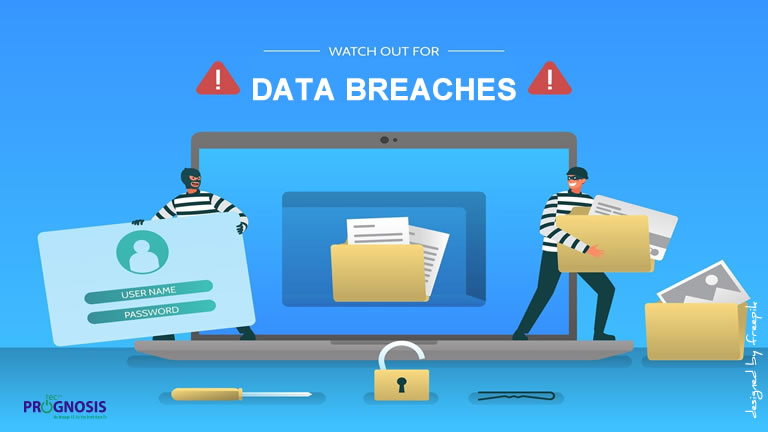
Cyber-attack concept, simulating data breaches, showing username and password theft, laptop with open document folder, credit card information theft and an open lock.

Major Data Breaches of 2024: Lessons and Best Practices for Small Organizations

In 2024, data breaches made major headlines, sparking concerns about data security across sectors. From healthcare to finance, we saw cybercriminals exploit vulnerabilities in systems worldwide, often impacting both large and small organizations. While big corporations might have the resources to recover swiftly, small and medium-sized businesses (SMBs) often face unique challenges, including limited budgets, expertise, and cybersecurity infrastructure.

This article will examine some of the major breaches of 2024, explore why SMBs are at heightened risk, and share best practices and tools that can help organizations protect themselves.

Read more

Share

Privacy Risk Management in Cybersecurity: A Comprehensive Guide

Isometric illustration showing a 3d laptop, fingerprint, security shield, credit card, data privacy, 3d lock, and text of the key components of privacy risk management in cybersecurity.

Effective privacy risk management is crucial for protecting personal data and maintaining compliance with privacy laws. By conducting regular privacy assessments, implementing tracker scanning, managing user consent, and handling subject rights requests diligently, organizations can mitigate privacy risks and build trust with their users. Embracing best practices and leveraging privacy management tools further enhance these efforts.

This blog post delves into the key concepts of privacy risk management, including privacy assessments, tracker scanning, consent management, and subject rights requests. We’ll also explore common challenges organizations face, offer best practices, and recommend popular tools to help manage privacy risks effectively.

Introduction to Privacy Risk Management

In today’s fast-moving technology and increasingly digital landscape, the protection of personal data is not just a regulatory requirement but also a critical factor in maintaining customer trust. Privacy risk management involves identifying, assessing, and mitigating risks associated with the handling of personal information. It ensures that organizations comply with privacy laws and regulations while safeguarding individual privacy rights.

Read more

Share
Share
Share